I’ve missed finding the time to write about our trip. Each day that I haven’t, I have wistfully said to myself, “I’ll put it on my to do list for tomorrow” and then the next day would pass. After a week of temperatures hovering at or near 100 degrees, I’ve found some time to write about our time hunting for black summer truffles and our last couple days in Spello.
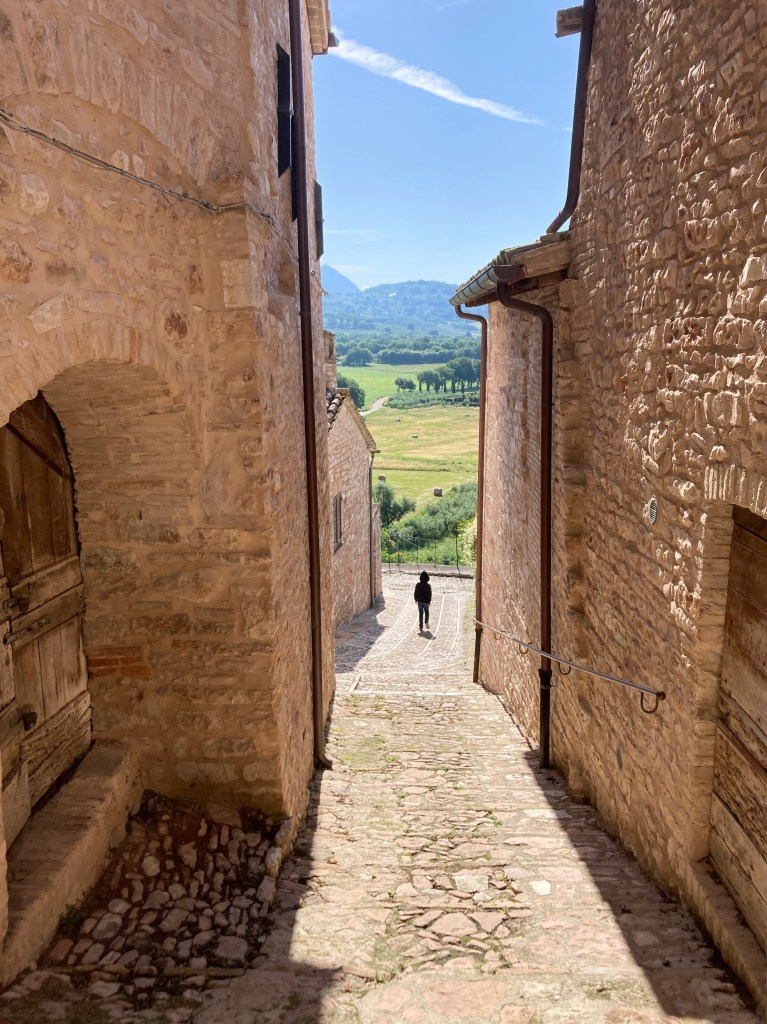
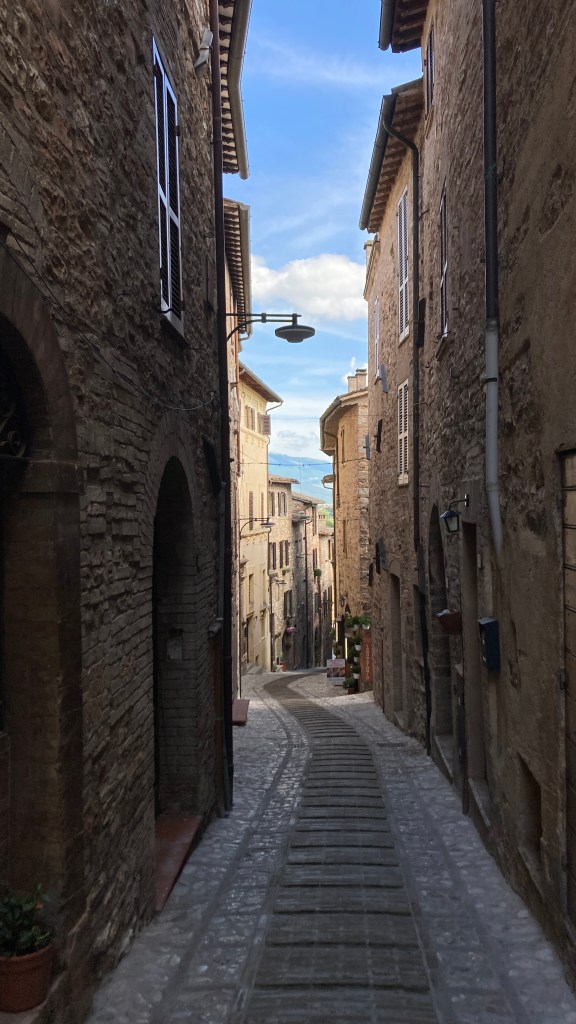
I arranged a truffle hunt, lunch & wine tasting at Tili Vini in Assisi for Friday, our last full day in Spello. I found Tili when searching online because our originally scheduled truffle hunt through our rental’s host had been canceled due to bad weather. Fortunately, Friday dawned with a warm, strong sun and blue skies and we saw Spello in a different light, with every ancient piece of stone glowing rose-colored.

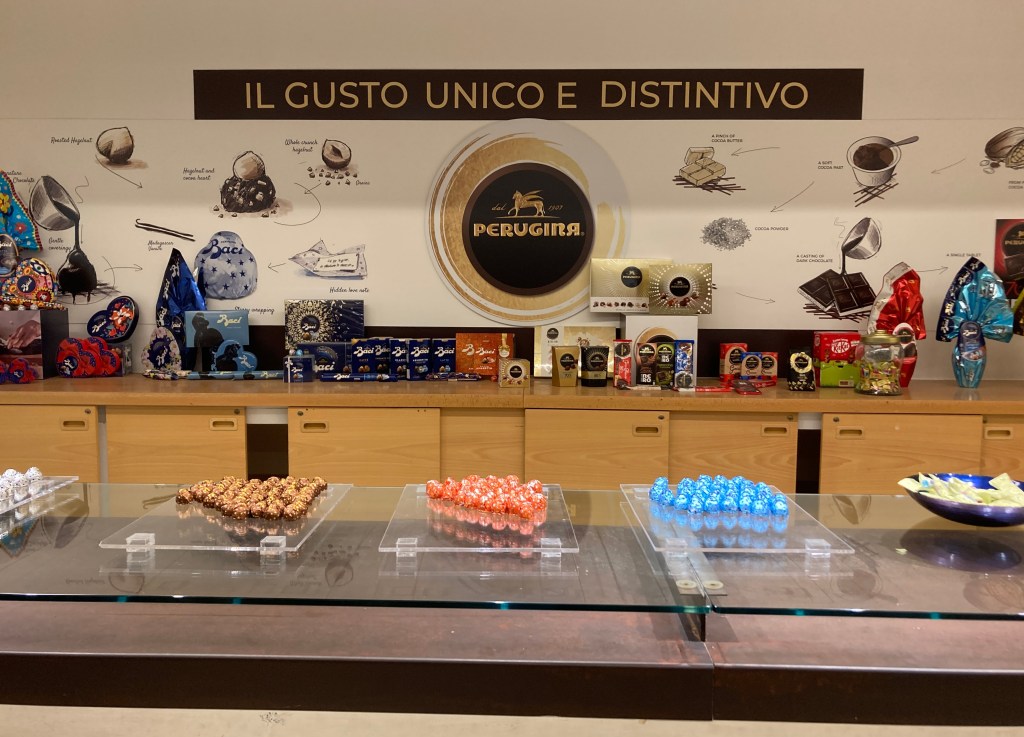
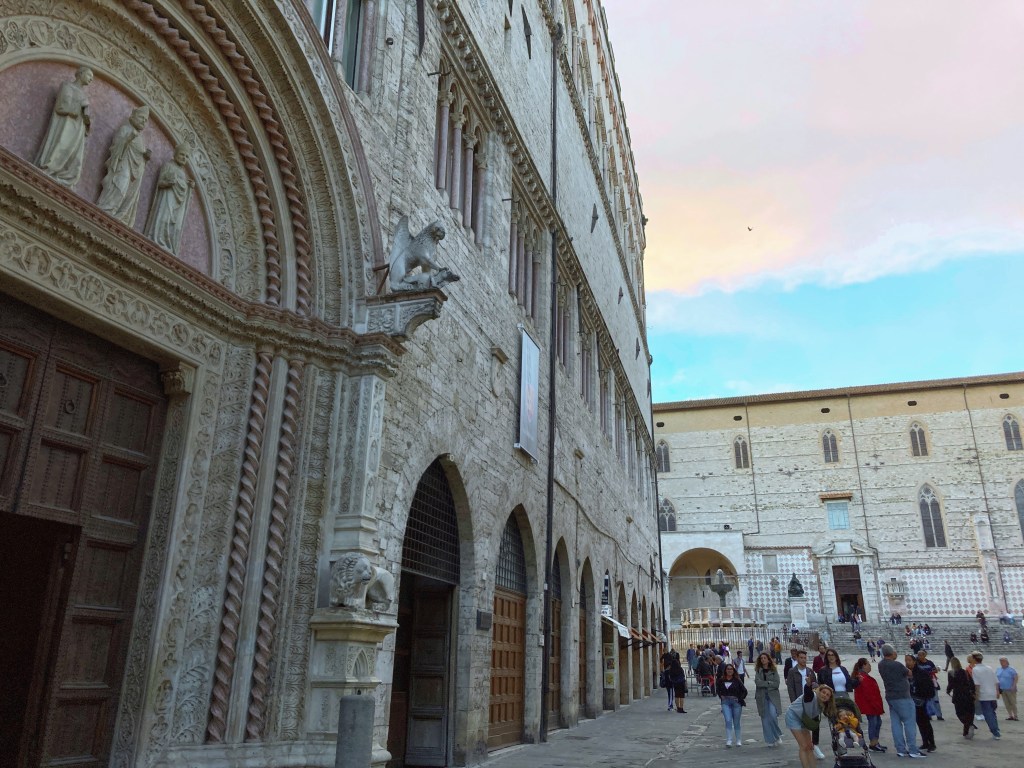
Before I get into truffle hunting, I’ll briefly recap the day prior. We had arranged and went on a chocolate tour at Baci Perugina to see how Baci are made. Baci means ‘you kiss’ in Italian. We followed that by a trip into the city center of Perugia, to visit the Galleria Nazionale dell’Umbria and then to have dinner. The gallery was excellent, but we found the chocolate tour was just okay. A funny coincidence, however, occurred there. One of the couples on the chocolate factory tour turned out to be the only other guests in our truffle hunting group. The embarrassing part? We never got their names :(. Fast forward to Friday, there was no time for introductions before we were driving off to the woods to embark on the truffle hunt. As the day proceeded we shared a lavish lunch, chatted about recognizing each other from the Baci tour and learned all about each other. Perhaps we were all to shy to admit we’d not exchanged names before we were into hour three of conversing. We decided to refer to them as Dr. & Dr. Mystery in our recollections of this day and we recall the newlywed couple who had just married the week before very fondly. Both are Doctors living in Queensland, and they were taking a three month honeymoon all over Italy after marrying in Tuscany. Dreamy, right? Imagine their travel writings…
Our truffle hunt was led by Annalaura, the daughter of her wine-making parents, the owners of Tili Vini. In Italy, to truffle hunt, you need the right paperwork. There is a difficult exam that must be passed. Then, you need a truffle hunting dog, and without a good one, you won’t be finding many truffles. Truffles are a fungus. They have a symbiotic life with specific trees: primarily oak and pine trees that the truffles grow under, along with their root system. There are five different types of truffles, with white truffles being the most prized and incredibly valuable. A google search shows that a pound of white truffles can go for between $2000-$4000 USD. The white truffles season is from September to December. We were hunting instead for the summer black truffle. Annalaura had us follow her by car to a forested section of their property, where she introduced us to her dogs, one a large husky type breed that was just along for the ride and an another, a black and white small Cocker Spaniel, named Dodo. We now have Annalaura and her truffle-hunting dog named Dodo, Dr. & Dr. Mystery, and us.
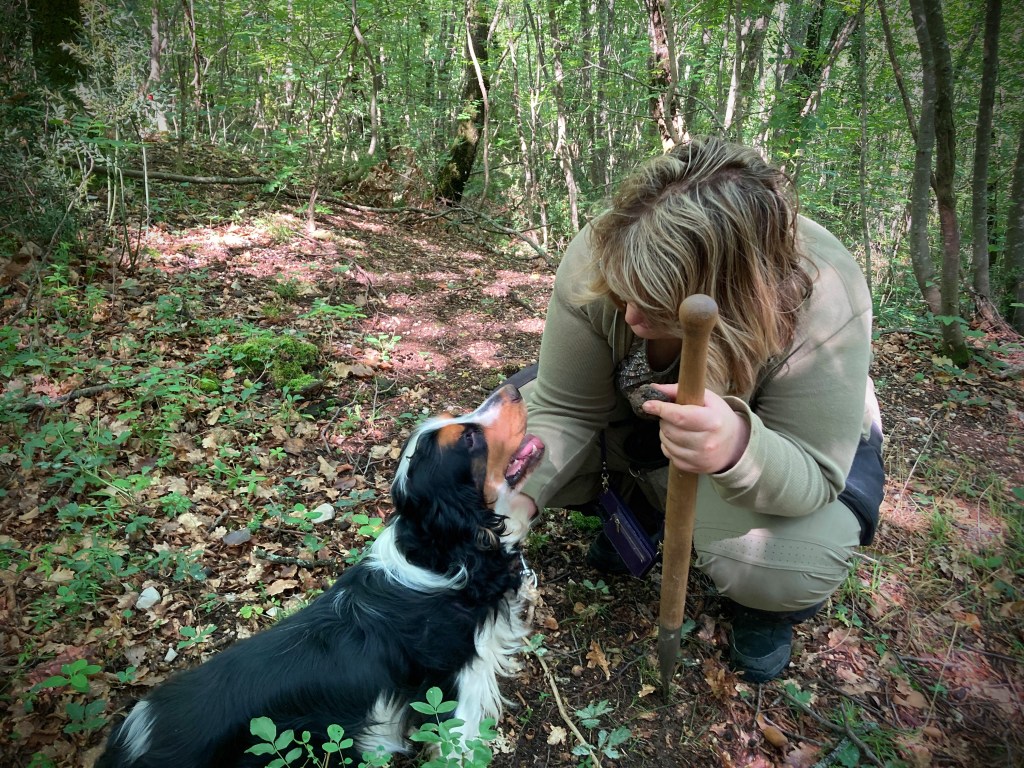
Annalaura had sadly just lost her former truffle-hunting dog and her and Dodo were still getting to know each other. Dodo was still a puppy, only about seven months old but out of her litter, showed great promise in finding truffles. She spoke of the Cocker Spaniel breed having a natural desire to hunt and retrieve. Loosing interest in repeating the activity after finding one truffle is what keeps many breeds from making good truffle hunting dogs. Dodo’s enthusiasm never waned in the time we were out looking for truffles. She told us about how wild boars are also good at finding truffles but that they can be dangerous to be around as well as destructive to the intricate root systems of the trees that the truffles grow under. To damage that delicate ecosystem for the fungi, is to inhibit the growth of more truffles, later.
When the truffles mature, they release an aroma, signaling their readiness to be harvested. They grow right below the soil’s surface to up to 25 centimeters deep, depending on the soil. Annalaura carried a tool, to gently pick at the soil whenever Dodo made a discovery.
In a sing-songy voice, Annalaura would say, “Dov’è … Dodo?!” as in, “where is it, Dodo?” on repeat and Dodo would scamper around the woods, with all of us trying to keep up with her. She’d go one way, then pivot another, with us loosing sight of her a few times. Then, with her her nose always leading her, she’d stop and start digging. Annalaura would sing praises to her, masterfully use her tool or hand if she could already see something in the ground and seconds later would hold up a black, round truffle and put it in her pocket. Dodo would receive a lot of dog treats, praise and pets and the process repeated for about 45 minutes. I think we would have been out there much longer, had we not been so successful. Annalaura said the truffles were smaller this year but she was happy with how many we found. She felt the recent rain helped but that previous years with more precipitation in the winter season often yielded larger truffles in her opinion. After posing us with truffles, her tool and Dodo, she took our picture. It was exiting to hold the small pile of truffles that had been hidden in the forest and also amazing to realize a Cocker Spaniel was able to locate them all by her power of scent.
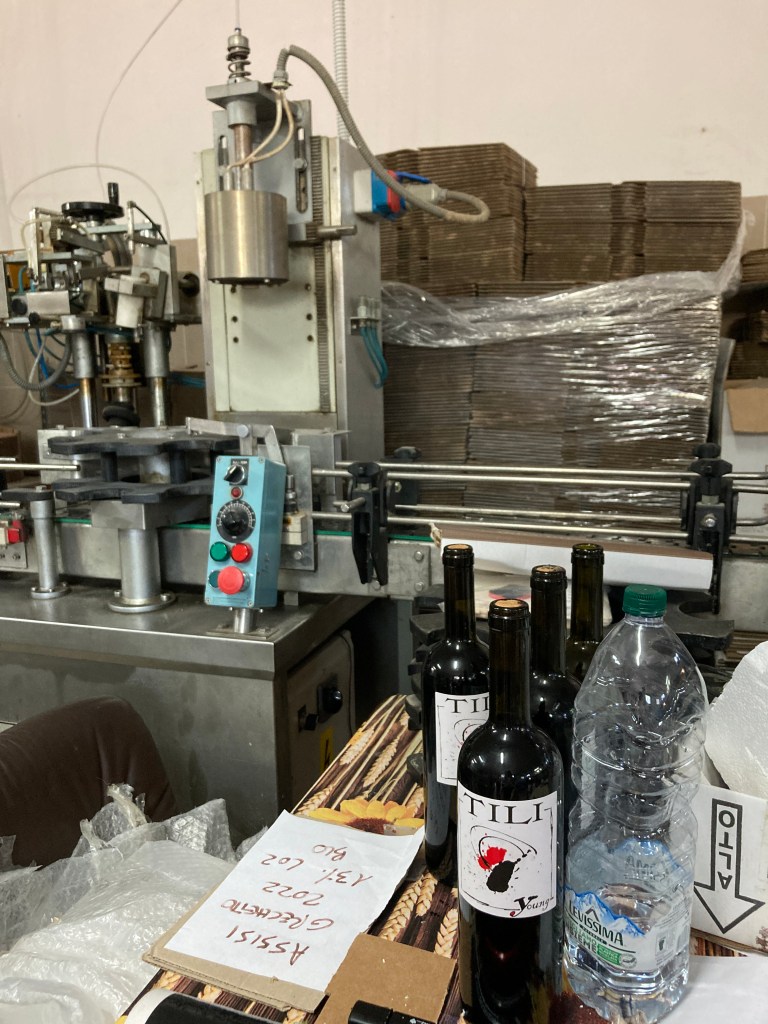
We hopped back into our cars and bumpily drove out of the woods to our next stop: the wine making facility. There, we received a very thoughtful and passionate telling of the Tili family’s beliefs about wine and learned about their wine-making practices. All organic, all hand picked because of the old vines and the way they let their grapes grow (not trained to grow horizontally like a lot of larger, more mainstream growers). The Australians and us (all of us coming from wine producing regions of our respective countries) were shocked as our tour guide shared with us how a lot of wineries rely on adding flavoring “chips” (wood chips, specifically oak, or other chips with some other flavoring) to enhance their wine. We had had no idea and hadn’t been privy to that detail on other wine tours. Tili doesn’t do any of that and she showed us they use stainless steel tanks as well as large oak barrels depending on the varietal. We also learned that they bottle their own wine to have better control of cleaning the bottling equipment between bottlings and how they want to know that the process was done correctly. They also make their own olive oil and in a separate facility, they make balsamic vinegar as well.
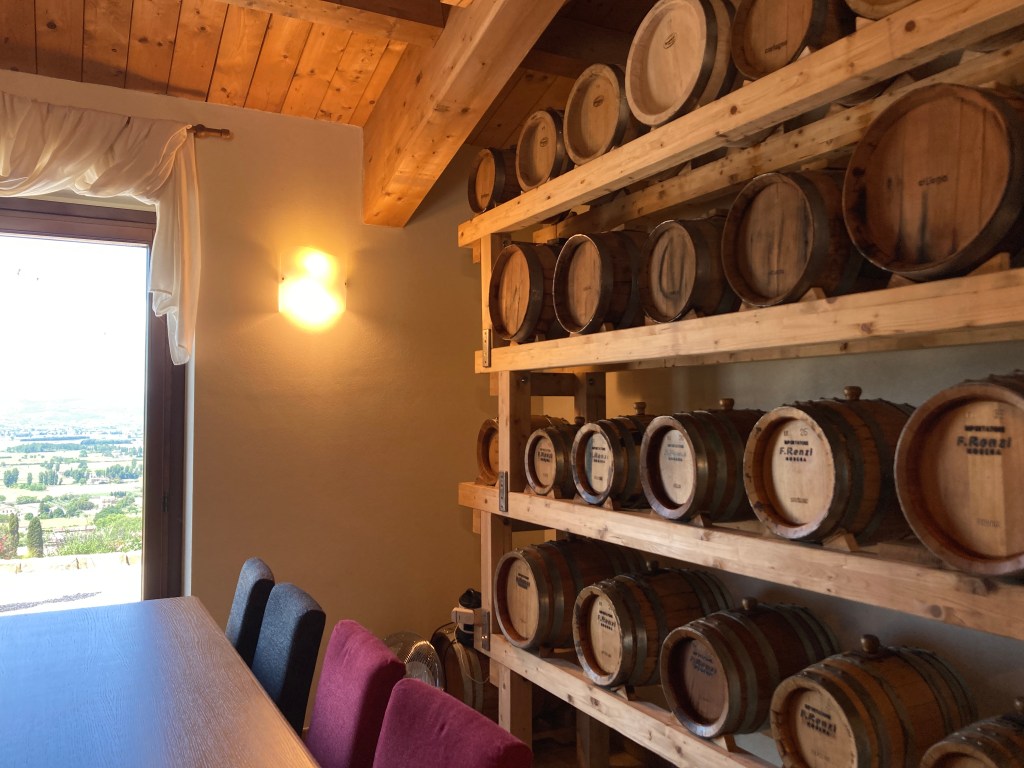
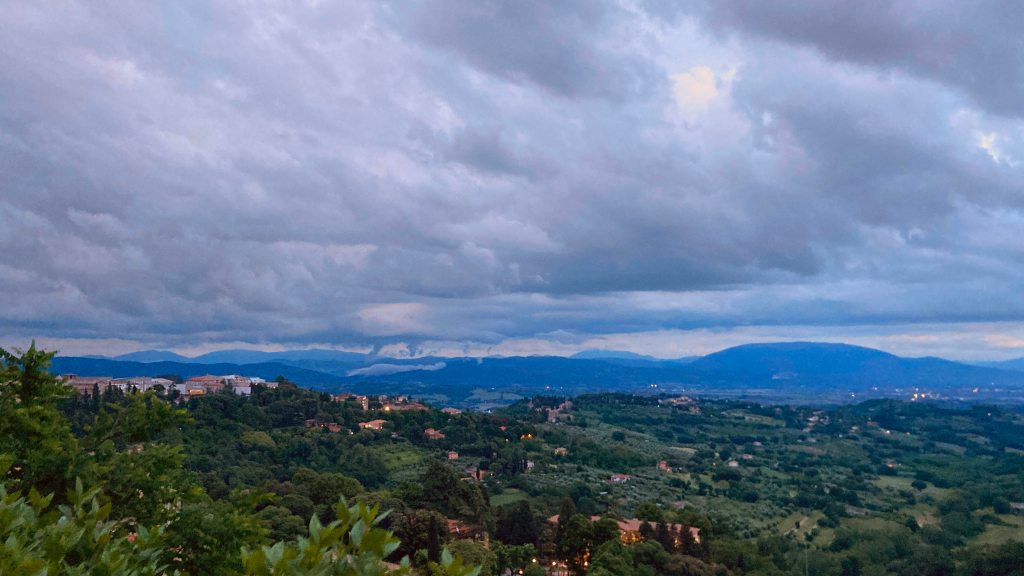
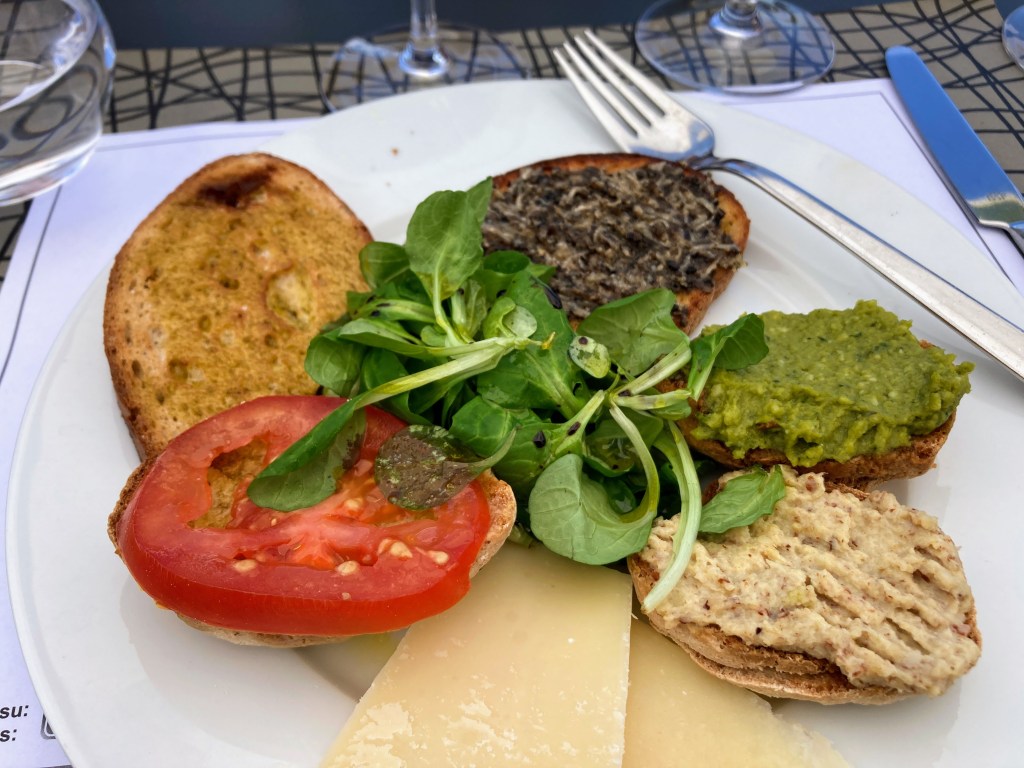
Next it was time to sample all these wonderful creations. We were seated on their deck overlooking the vines and hills of the region. We sampled at least four wines as course, after course of amazing, homemade food was presented to us. There was a course of four different toppings on crostini, a pasta with black summer truffles, cheeses and a secondi, followed by dessert. All incredible, and punctuated by the pouring of another wine to go with whatever course we were eating at the time.

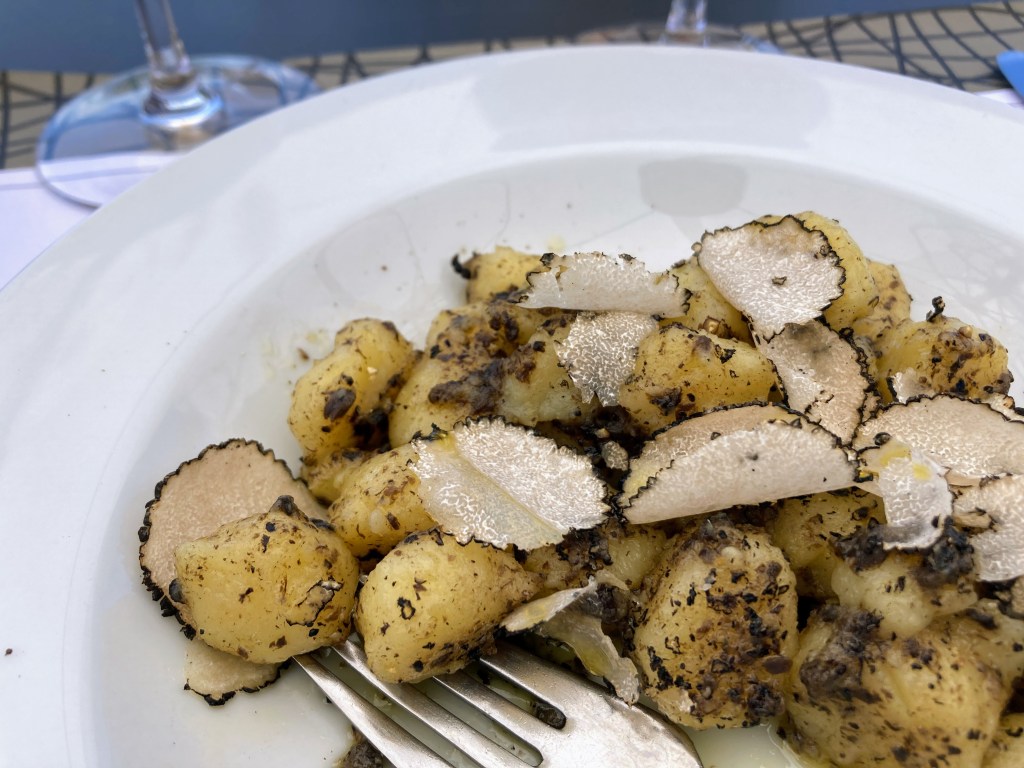
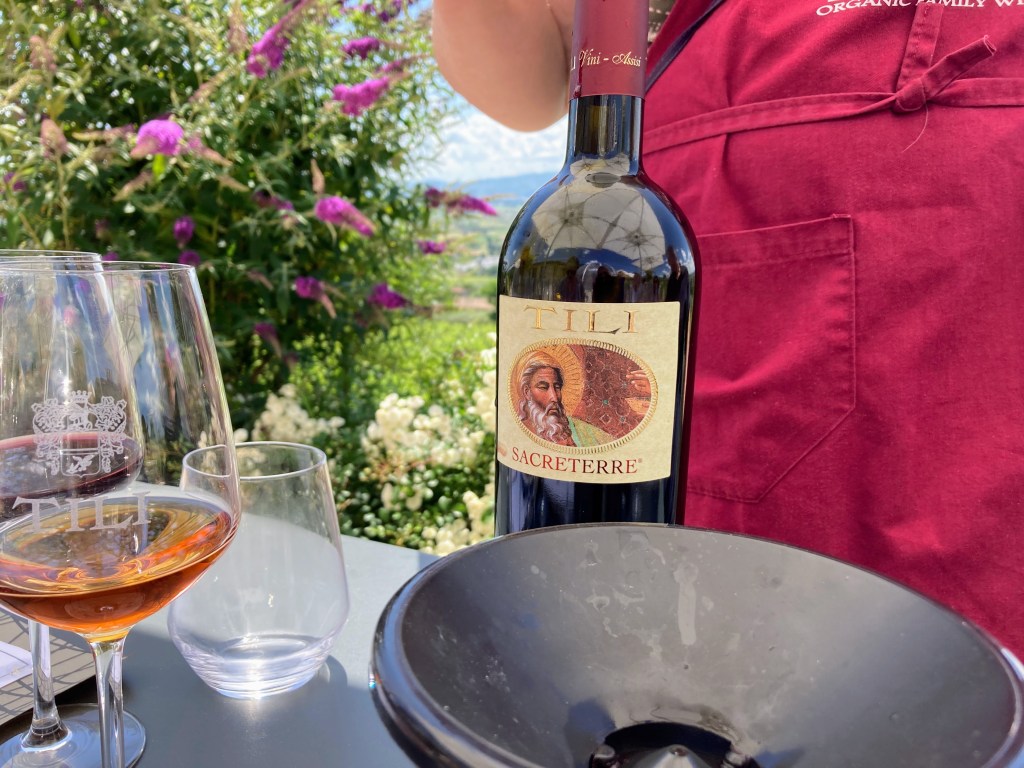
While the kids enjoyed local fruit juice, we sampled so much delicious wine that we coudn’t help to order some to bring back with us. We also learned that Tili wines are mostly sold to visitors like us that are repeat customers. Our Dr. friends opted not to get wine shipped back to Australia. They shared that Australian wine equalization tax is a tax of 29% of the wholesale value of wine and on top of shipping it added quite a bit onto the purchase price!
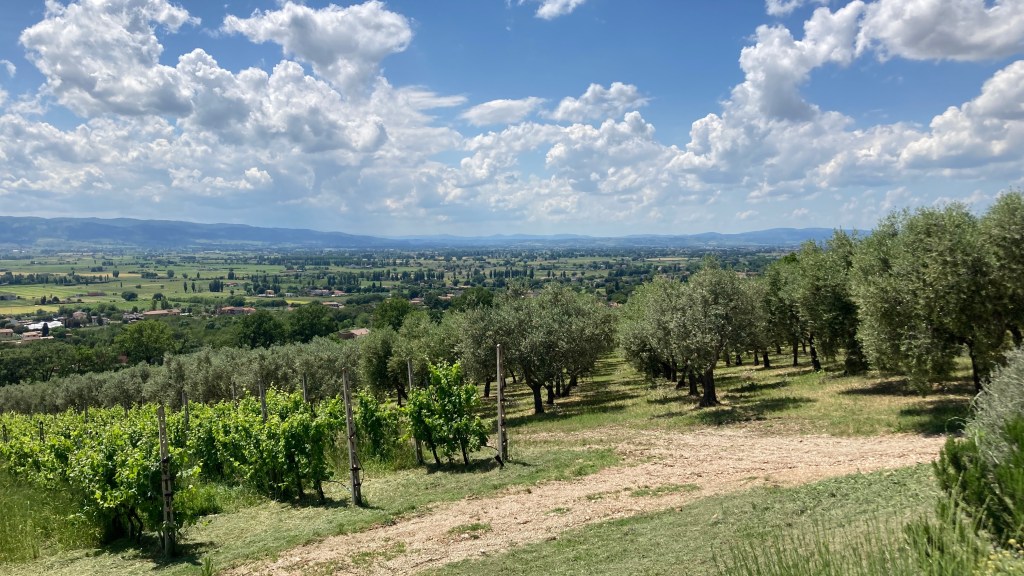
We made it back to Spello in time to hydrate, take a brisk dip in the pool and take one more wander through Spello. Souvenirs and gelato were purchased. Then it was onto packing as the next morning was checkout day. The week had gone too quickly. We had one last dinner at the same Agriturismo that we had so enjoyed so much on Monday night. We got more time with their resident dog and another fabulous meal. Turns out they were hosting a large tour group called the Road Scholars (haha). Ryan made small talk with a few Oregonians who were sitting at the table next to us.
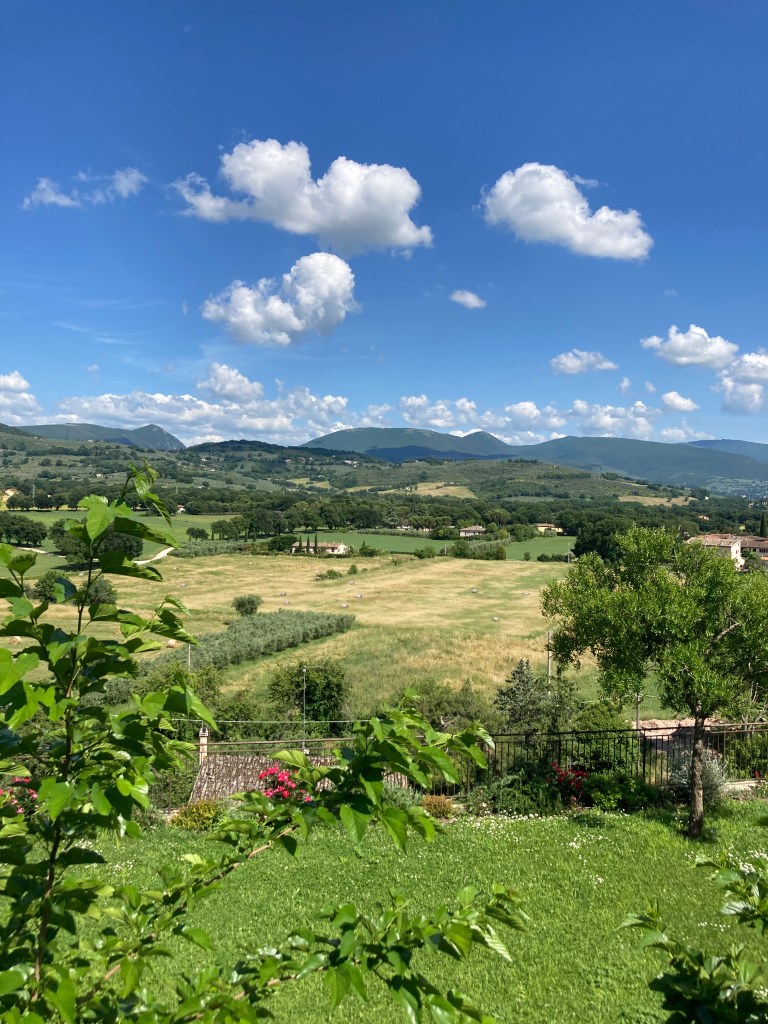
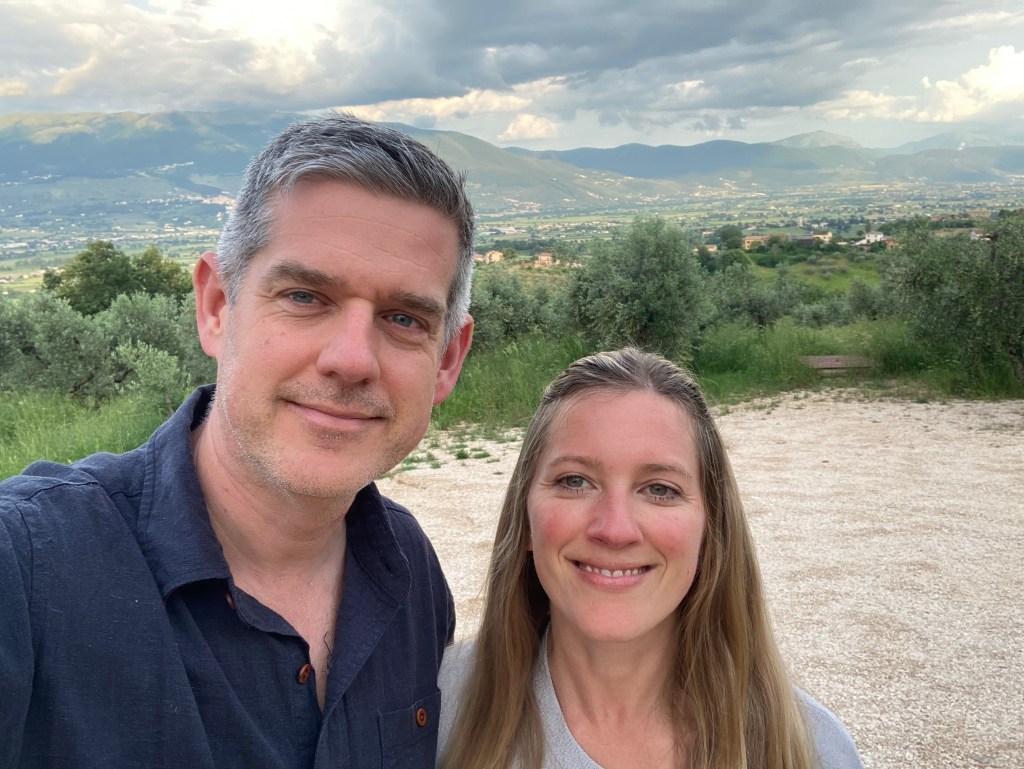
Our night concluded with wistful feelings that our time in Spello had come to an end. Fortunately, we could distract ourselves somewhat with plans to visit Orvieto the next day before we settled in south of Florence for our next leg of the trip.
Thanks for reading.
 The Rivers and Roads
Leave a comment