By Tuesday morning, I was feeling inspired to see if we could avoid the rainy forecast in Spello. After a quick look at the weather radar, I saw that the medieval town of Gubbio, situated about an hour’s drive north of Spello was going to be clear and sunny in the afternoon.
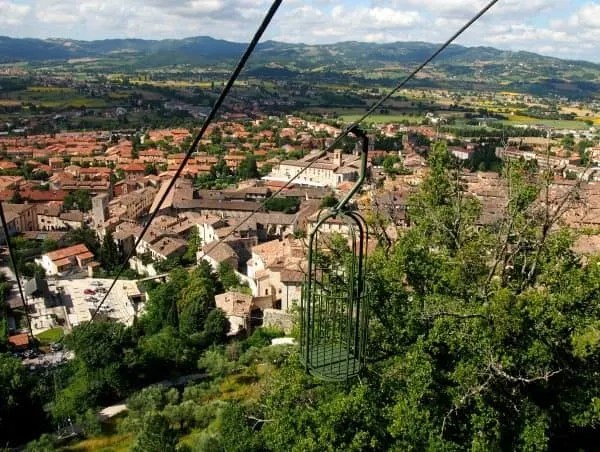
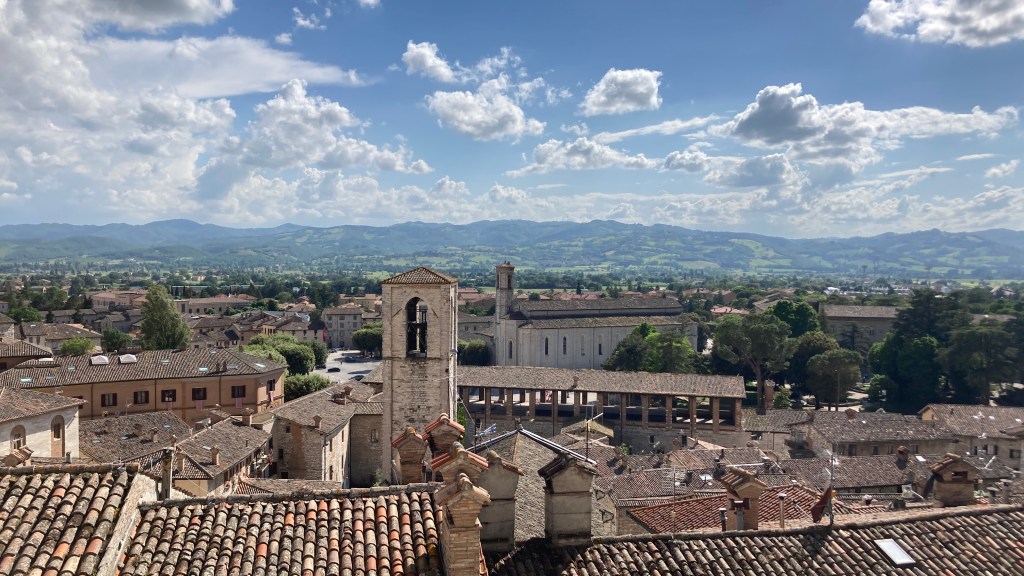
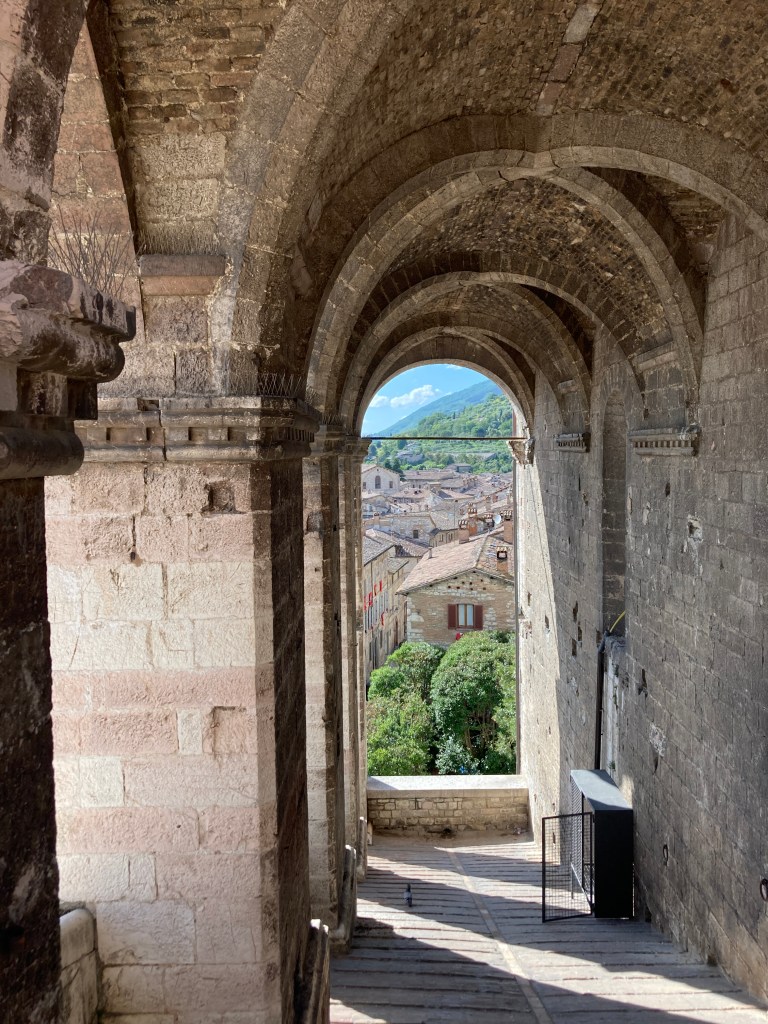
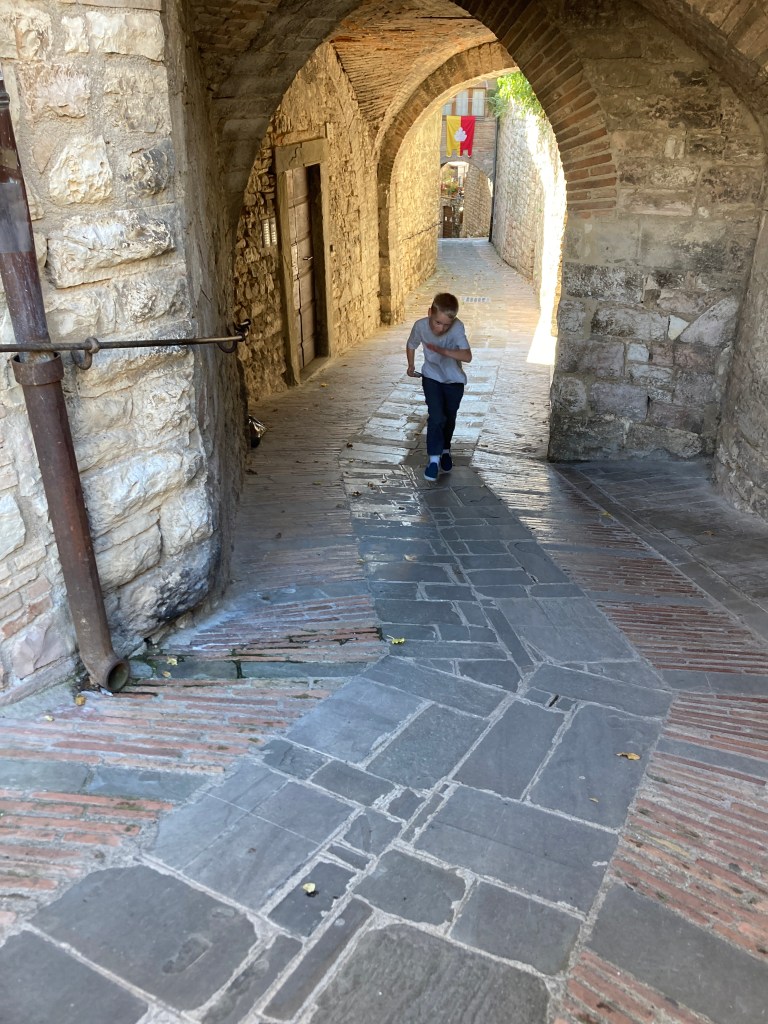
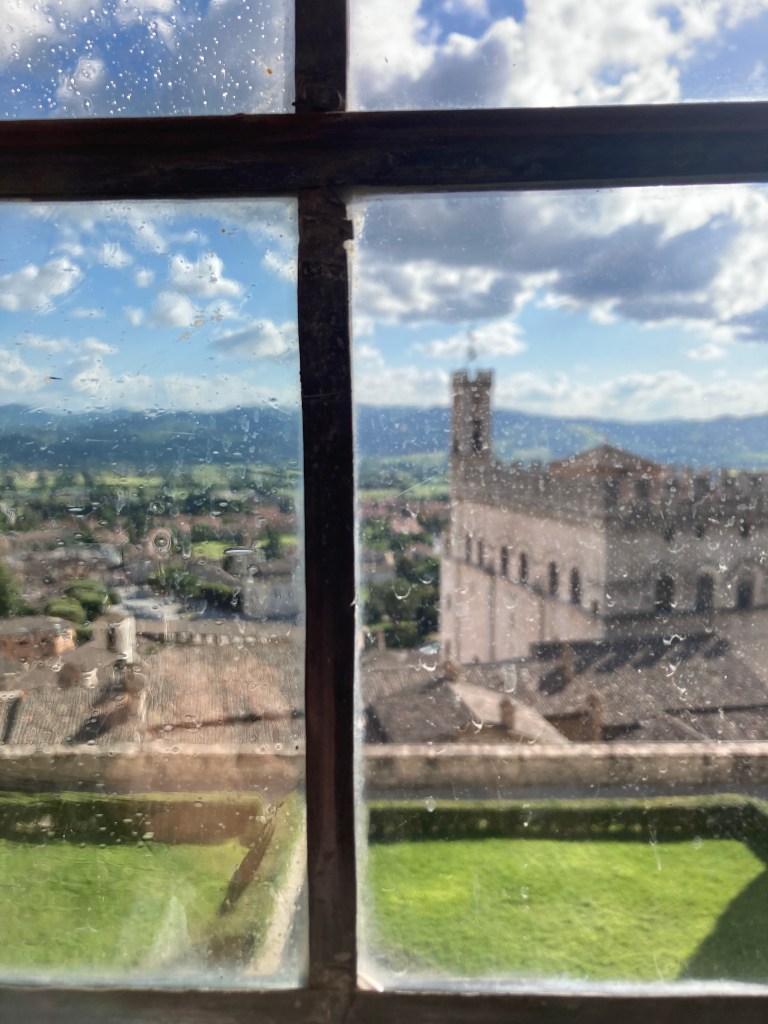
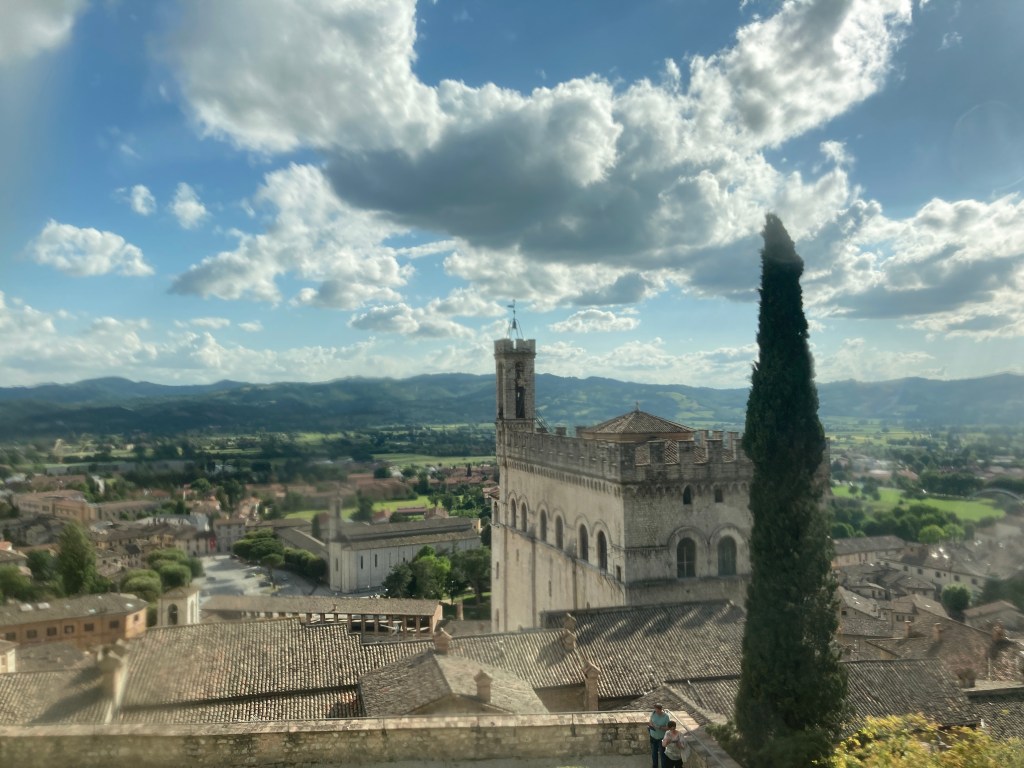
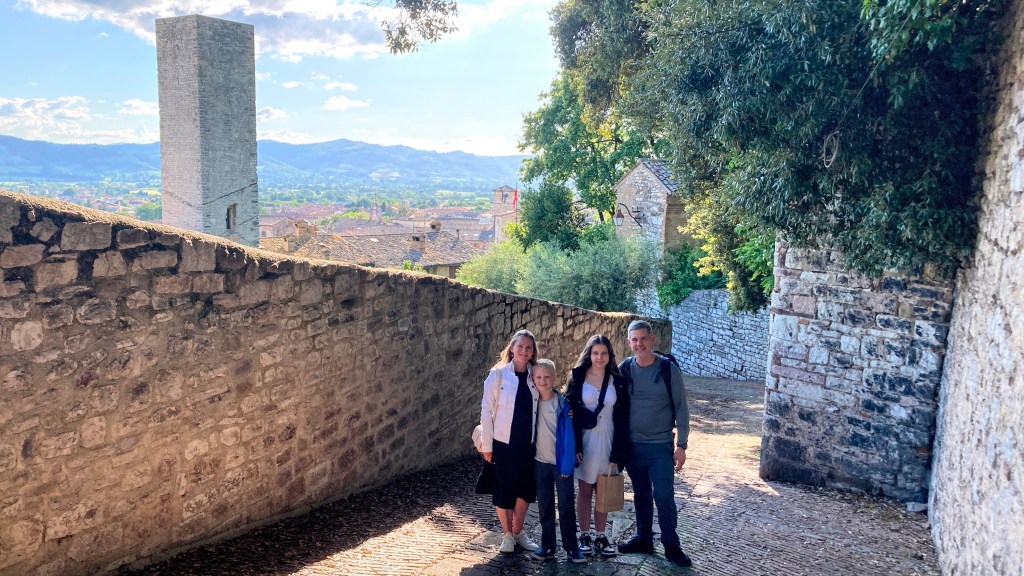
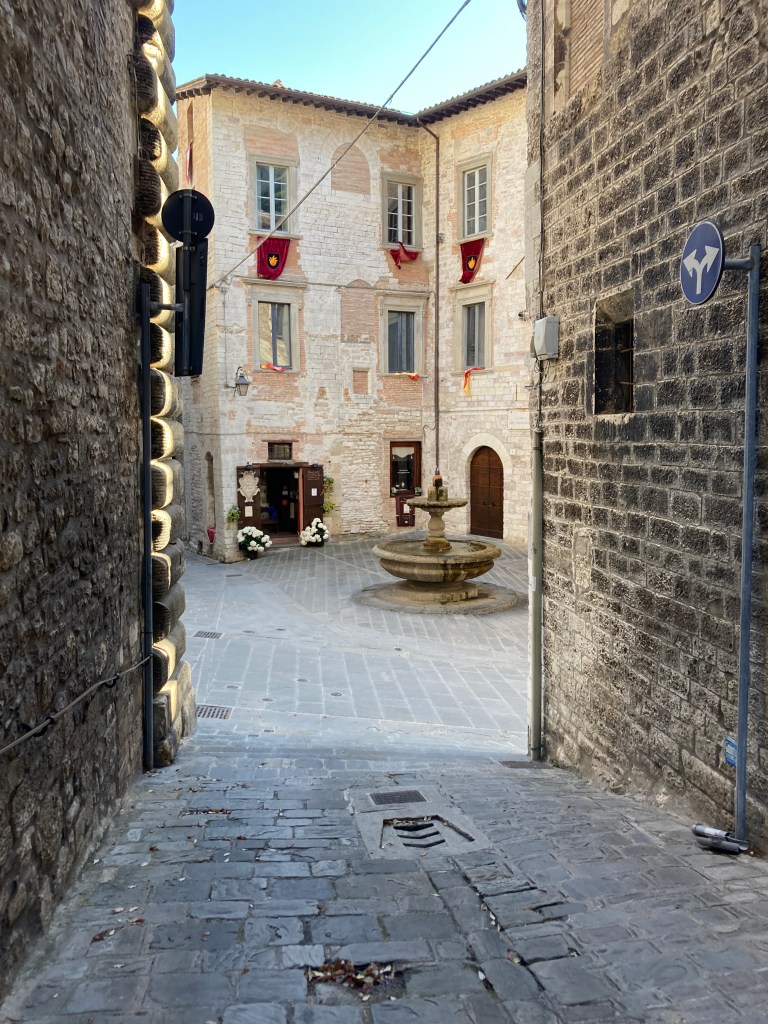
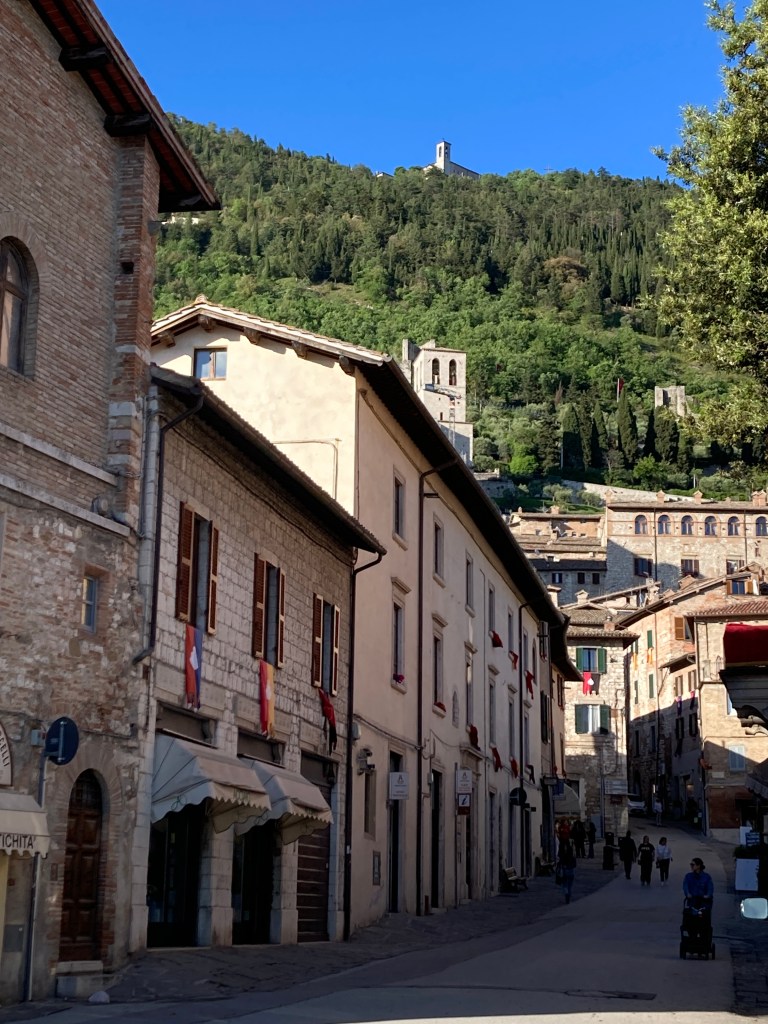
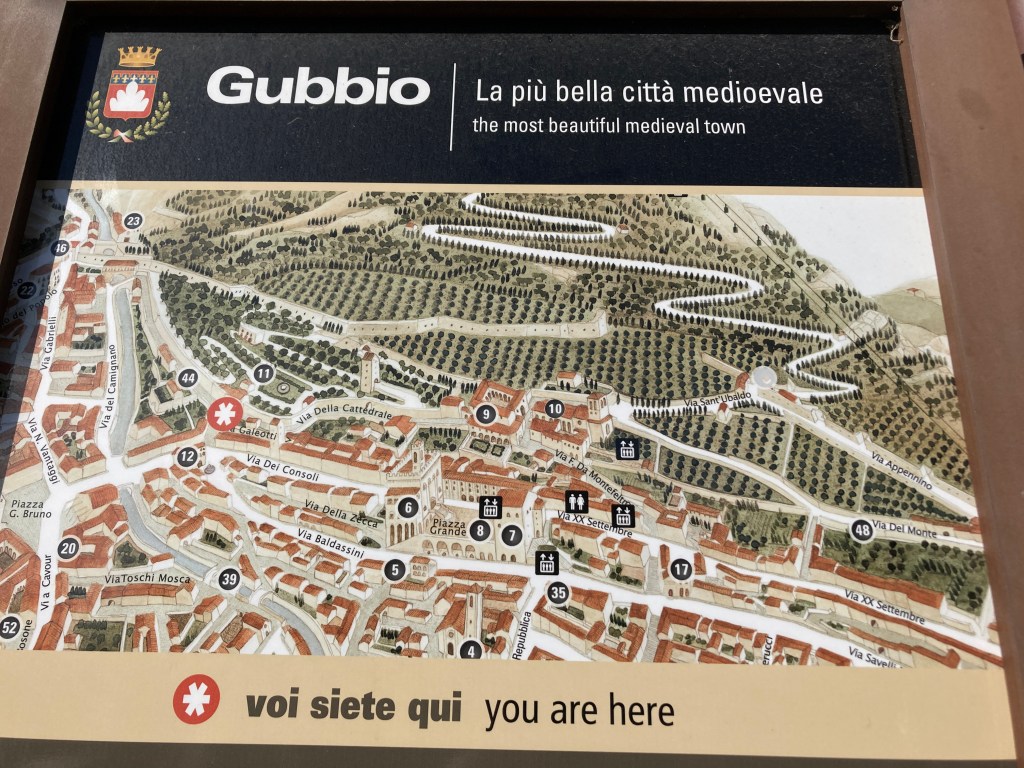
Gubbio became very powerful at the beginning of the Middle Ages (the town sent 1,000 knights to fight in the First Crusade). Despite it’s age, the town looked crisp and clean and it’s old buildings reflected the sunlight. The town is built on three levels up the side of the lowest slope of Mt. Ingino. The levels are accessed by quite steep walkways although during the daytime there are public elevators to use. Or you can go up via the Gubbio funicular. We opted not to – we had already put Mira through enough crazy heights in Switzerland and both Ryan and I decided that we didn’t fell up to swinging from what appeared to be a human-sized birdcage right then. Maybe if there’s a next time...after a glass or two of wine?
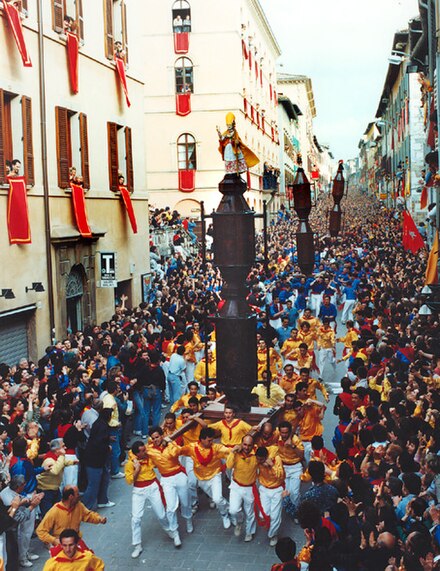
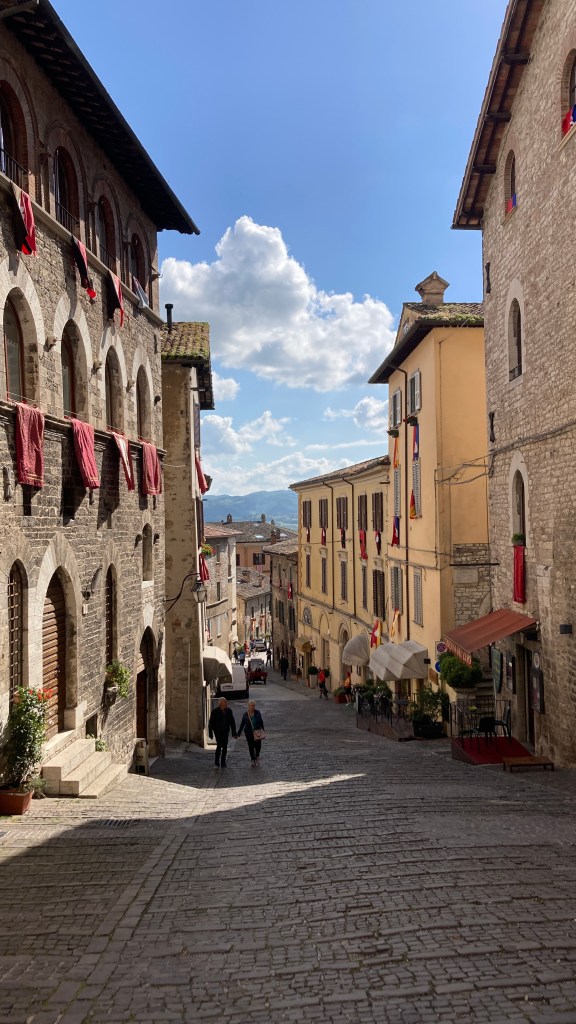
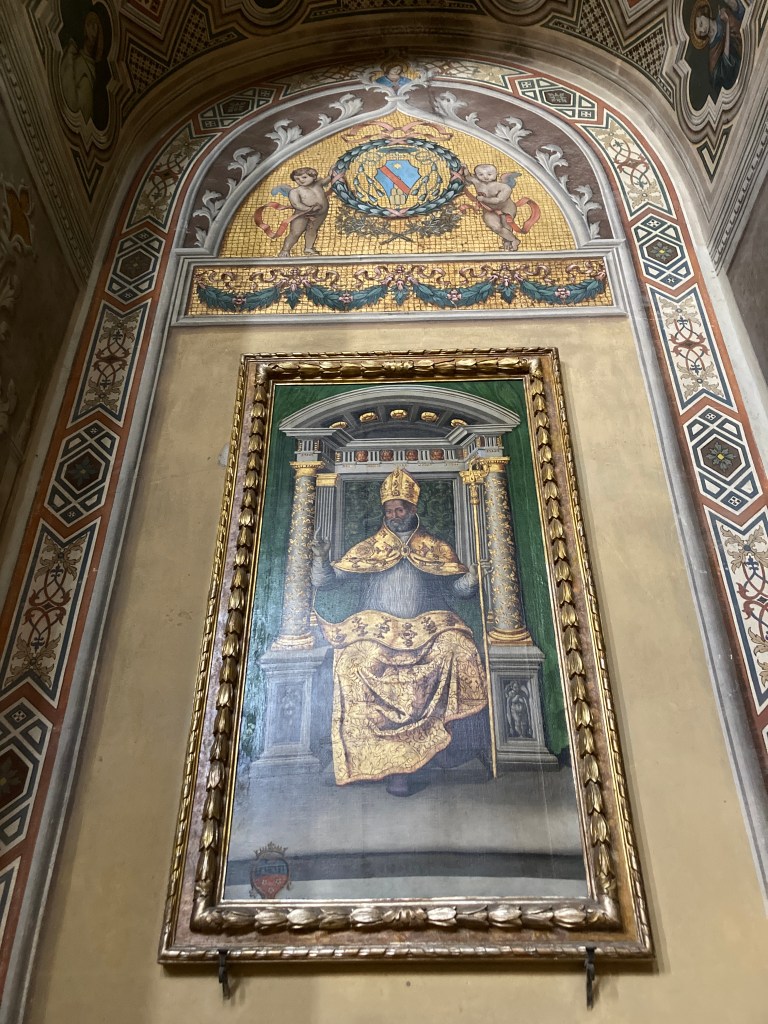
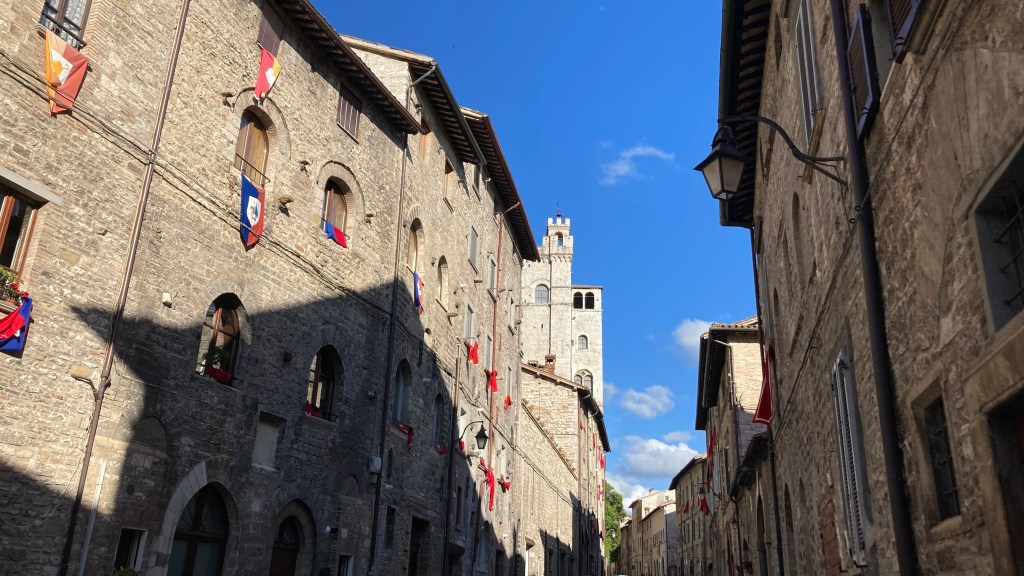
Wondering up the steep stone streets we we noticed that there were colorful flags hanging from most building windows. It turned out we had just missed the famous Corsa dei Ceri (race of the pedestals) now known as Festa dei Ceri, which takes place on May 15th. The race celebrates St. Ubaldo, St. George, and St. Anthony the Great. It’s origins date back to the 12th century when Ubaldo became the Bishop of Gubbio.
Festa dei Ceri consists of three teams that run through crowds while wearing their team color of either of yellow, blue or black, with white trousers and red belts and neckbands, up the mountain from the main square to the Basilica of St. Ubaldo. Each team carries a statue of their saint mounted on a wooden octagonal prism, measuring about 13 ft. tall and weighing 617 pounds! The route is about 7 kilometers uphill with many stops where people offer the team members food and wine.
Ryan often surprises locals by speaking the language well and with his accent being fairly good, they often burst into fast conversation with him (the downside being it is hard for him to catch half of what they are saying, because while he’s good, he can’t keep up with their pace). On our way out of town, a local man stopped us to speak to us in Italian. He talked Ryan’s ear off for about 15 minutes about the Festa dei Ceri as well as inquiring where we were from. Fortunatley, Ryan was able convince him to take it slow. He asked about where we were from and upon hearing that I was born in Pennsylvania, the gentleman started gesturing carrying a heavy pack on his back and kept repeating, “Scranton, Scranton, Scranton!” I’m thinking at first, is he a fan of The Office, how does he know of Scranton? It turns out that in the nearby town of Jessup, PA, it is also a tradition to race the three statues through the streets – a tradition the town carries out on Memorial Day weekend. This man was also very proud because he was one of the racers and has been for many years. He told us about a church we could visit on our way out of town where they display his team shirt that he wears each year in the race. We went to visit the church but it turned out they had a mass taking place at the time.
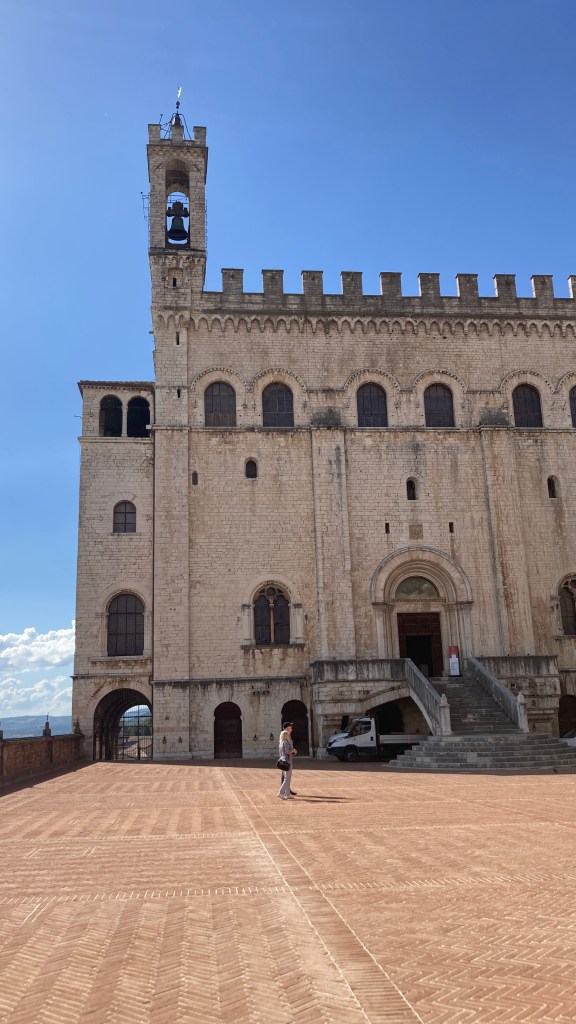
Near the top of Gubbio, we visited Palazzo ducale di Gubbio. It was built for Federico da Montefeltro, who lived there with his first wife. Federico was born in Castello di Petroia in Gubbio and had what sounds like, a soap opera-like childhood, where his father (Duke of Spoleto announced him as his illegitimate son, then it turns out he was likely Frederico’s grandfather). Frederico is most known for being the Duke of Urbino. Over the course of his lifetime, Montefeltro became the definition of a true Reniassance man, as engaged in the arts and writing as he was in fighting and commanding the military. We learned most of this while touring his home in Gubbio. They shared that in Piero della Francesca’s famous painting of him why he was painted in profile and what was up with his odd profile…
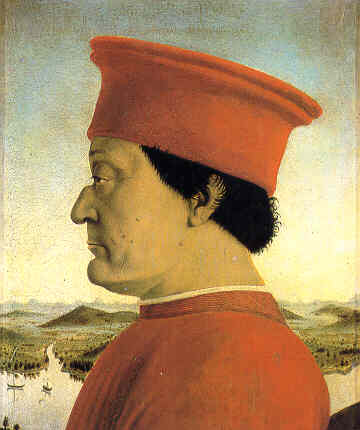
Frederico’s portrait by Piero della Francesca
In Ryan’s words, “He was such a bad-ass!” In around 1450, Montefeltro took part in a tourney and lost his right eye to a lance injury. Federico pulled himself together very soon after and according to legend, he said: “Patience, I’ll see better with one eye than with a hundred!”. He decided to cut the upper part of his nose away, in order to see better with his left eye!
There were two other noteworthy things we learned about Montefeltro.
He was very much in love with his second wife, Battista Sforza, who was also painted by Piero della Francesca. We later saw the Diptych of the couple in the Uffizi Gallery in Florence. She, very sadly died of pneumonia after giving birth to their seventh child at 25 years old. After loosing her, he spent much of his time in their magnificent palace in Urbino. The Duke referred to her as “the delight of my public and private hours”; a friend of his at the time also called them two souls in one body.
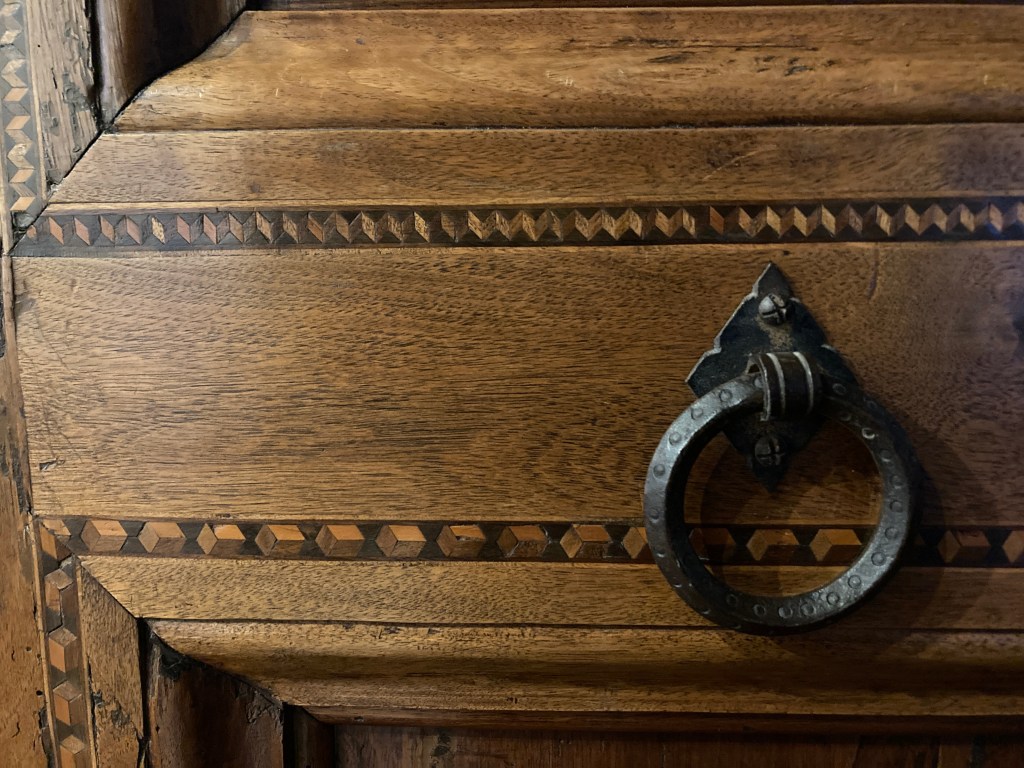
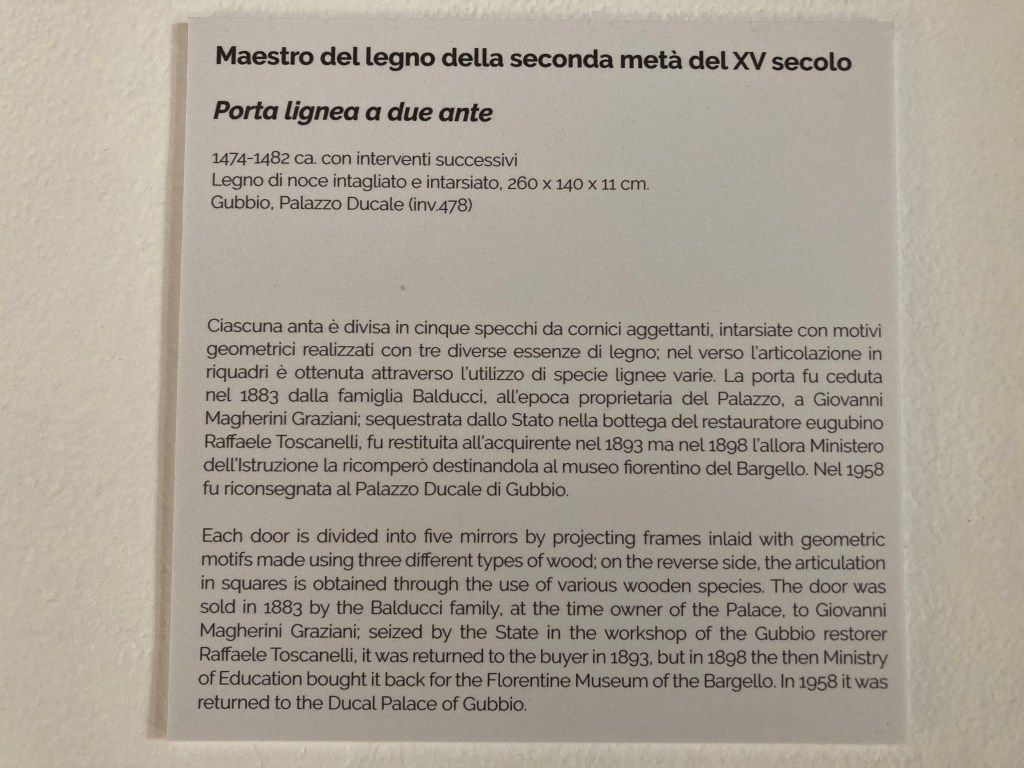
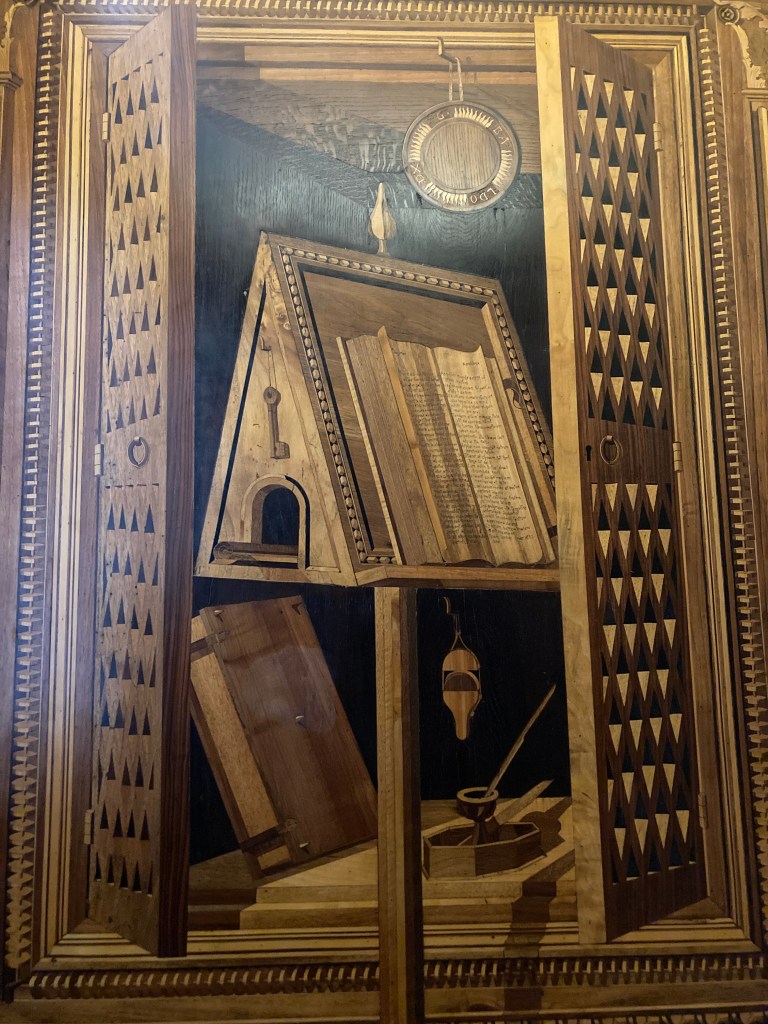
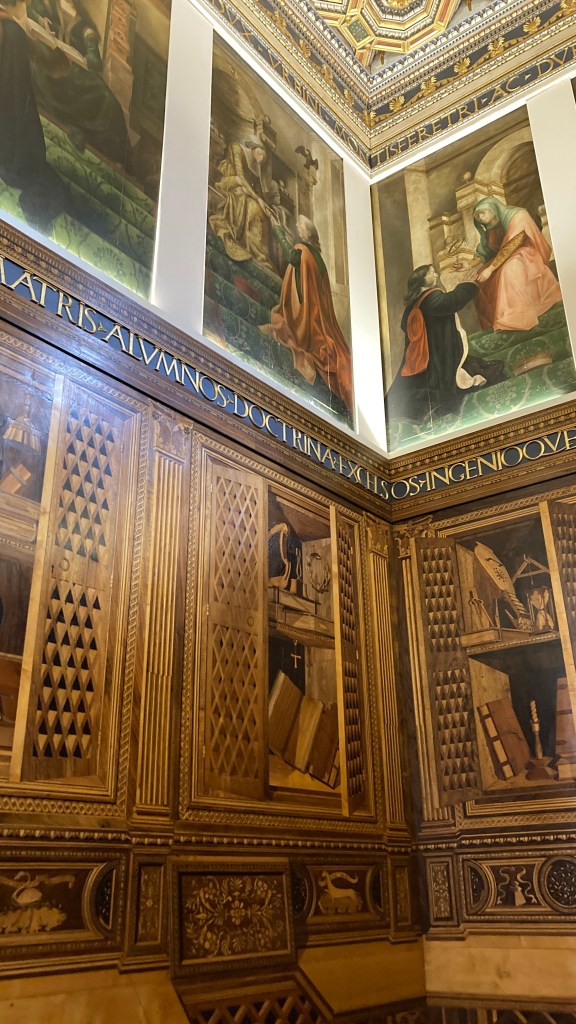
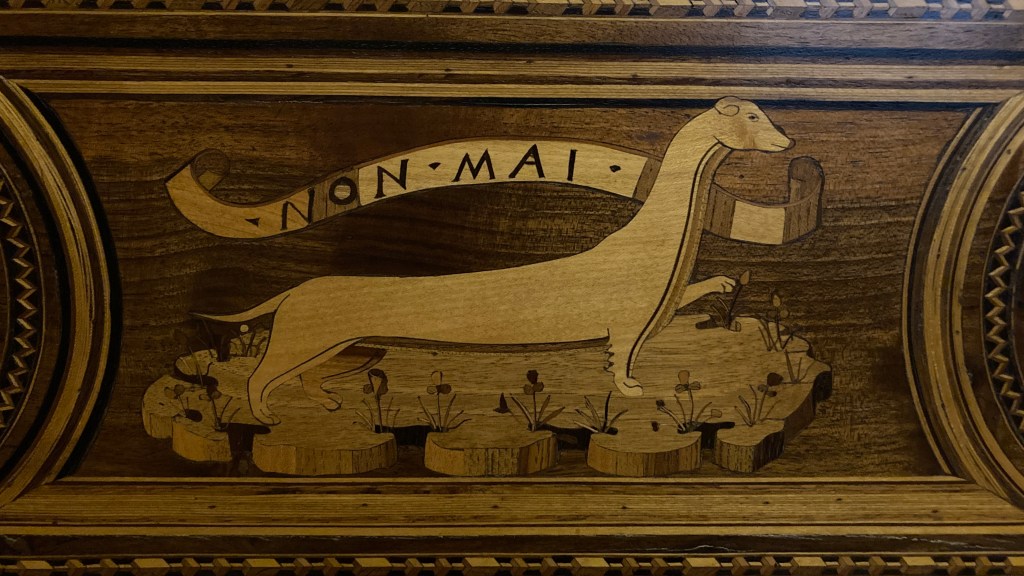
Lastly, he built a studiolo for himself that he used for meditation and only invited his closest friends to share the space with him. Amazing intricate wood inlay. The technique is called intarsia. The “cabinets” on the walls display objects reflecting the Duke’s interests and the depictions of books recall his library.
The original was unfortunately dismantled in 1874. The Balducci family of Gubbio sold all the decorative elements to Prince Lancellotti for his villa for 6,000 lira. He then sold it to Adolf Loewi, an antiquarian, for 150,000 lira who then exported it to America and sold it to The Metropolitan Museum of Art in 1939 for $32,000.
In 2001 Gubbio’s citizens’ suggestion to commission a replica to be made by the Minelli family workshop (who were master woodcarvers in Gubbio) became a reality. The intricate work took seven years to complete. I found this site here that goes into detail about the process and old woodworking techniques. https://gubbiostudiolo.unibo.it/index.php/la-replica-del-2009/
It was a great day of discovery. I found myself wanting to know all the details of Gubbio – a city so beautifully kept and with proud citizens happy to share about the town’s traditions with a tourist family wandering around. Looking back, we only scratched the surface of Gubbio in our half-day visit. We hope to return someday and spend a bit more time in this amazing mountain town.

 The Rivers and Roads
Leave a comment