On our second day in Zug, we decided to explore the city on foot. Rain was expected in the afternoon so we opted to see the town while we had better walking conditions.
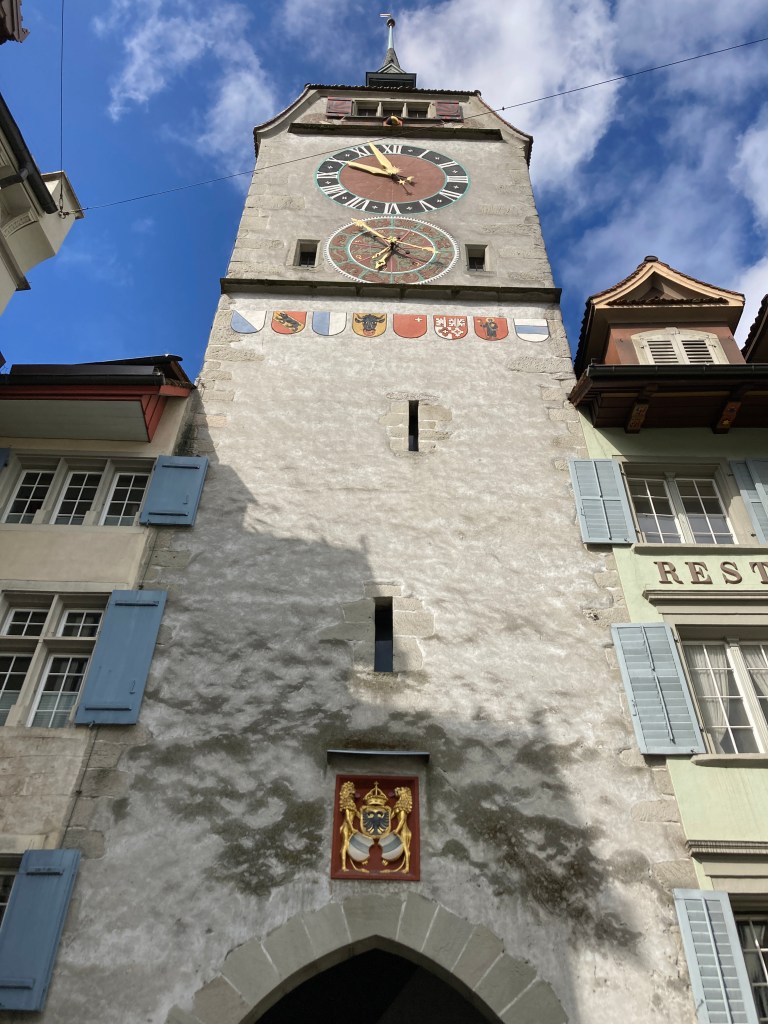
Just around the corner from our hotel is the town’s Clock Tower. The entrance to the old town of Zug was originally a gate in the town’s curtain wall. In the 1300s the gate was strengthened by a protruding D-shaped tower. In 1480, Hans Felder, who also built St. Oswald’s Church (also in Zug) modified the tower, making it the most impressive tower in town. 1n 1557, the tower acquired its current shape with a watch chamber. About twenty years later, the astronomical clock was added. Over the centuries it has been restored and also enhanced for safety. It was struck by lightning in the 1800s so it was given a new pinnacle.
Also, the tower served as a look-out post. A watchman would keep eye over Zug, alerting townspeople of any fires with a fire horn. It was a fairly uninviting tower back in the day due to the three prison cells it contained. Citizens who didn’t abide by town regulations sat out their punishment in the tower.
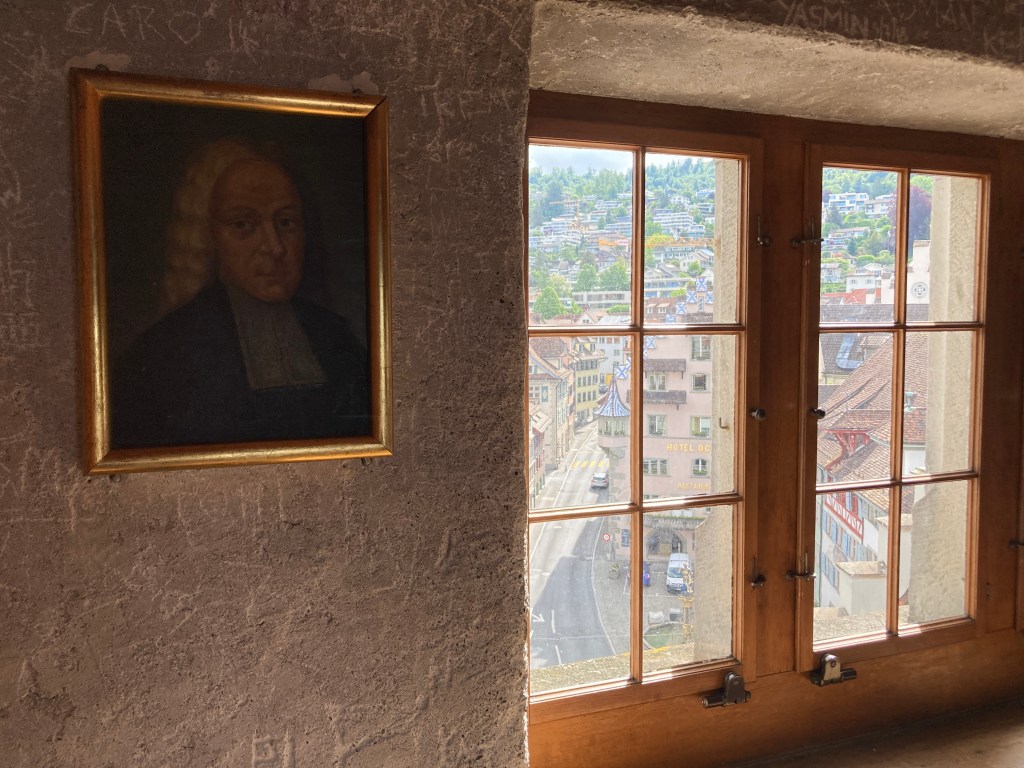
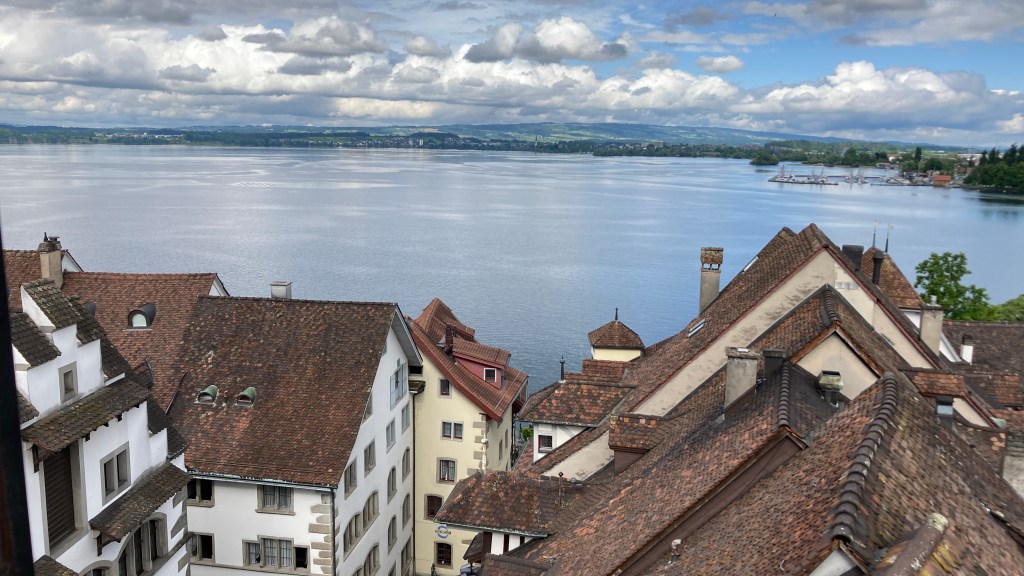
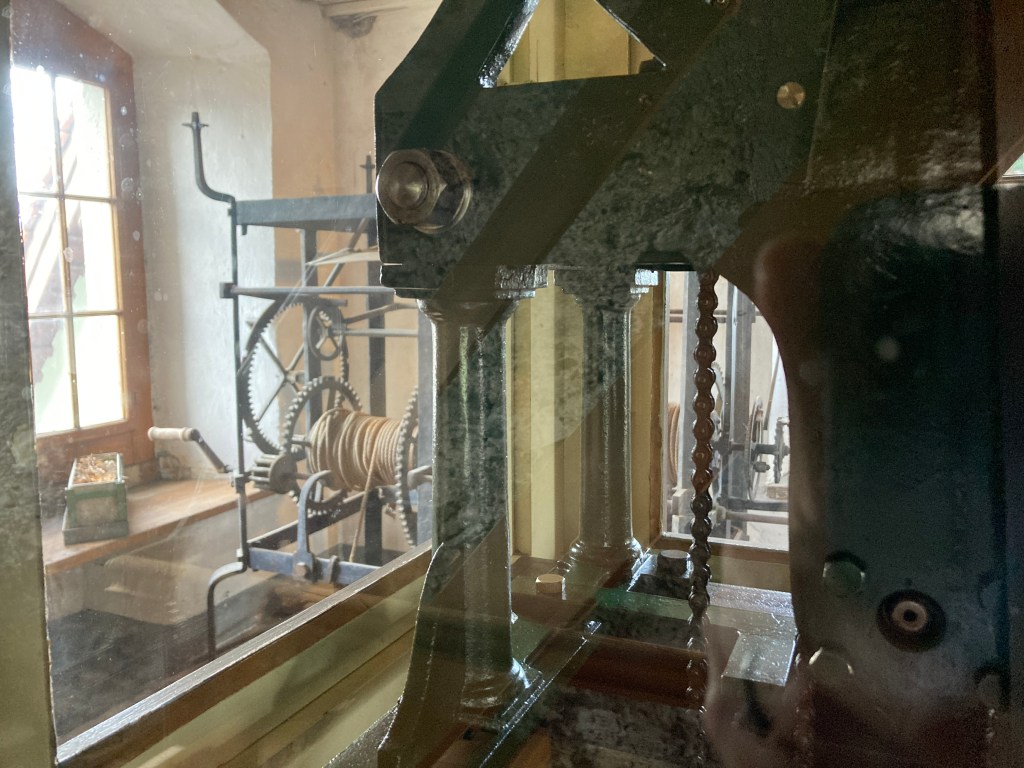
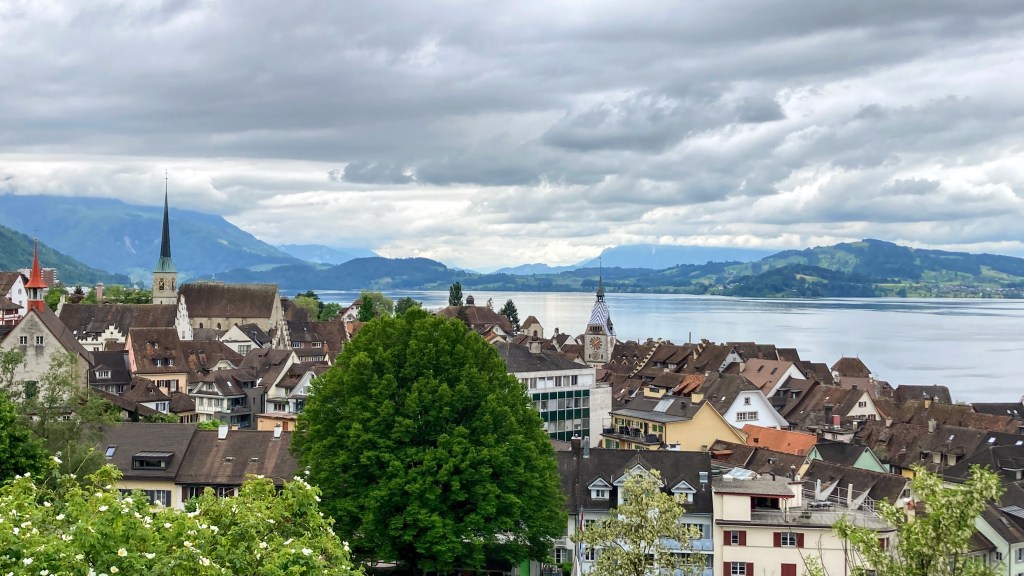
We wandered under the tower (the way it is constructed now, there is an underpass) and noticed a poster about touring the inside of the tower. With a QR code and a smartphone we found out that you could borrow a clocktower key from the shop owner next door. After Ryan handed her his driver’s license, she gave us a key for us to open up the tower. Many sets of wooden open stairs led us to the very top and a great perspective of Zug. Along the way we could see the clock components.
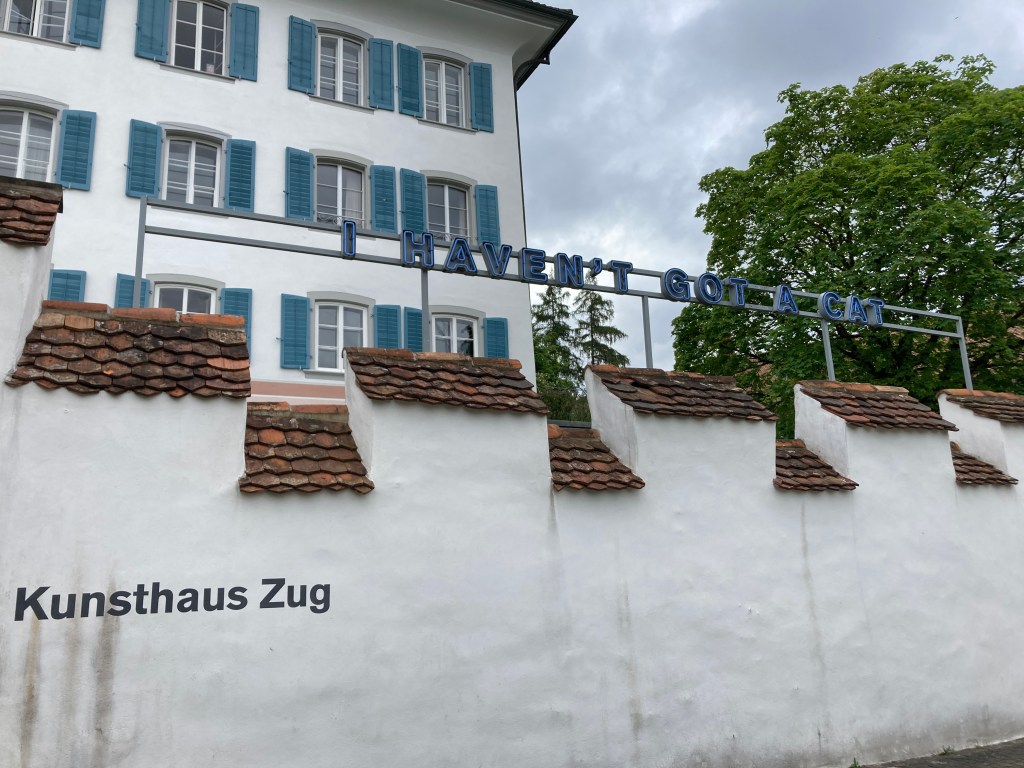
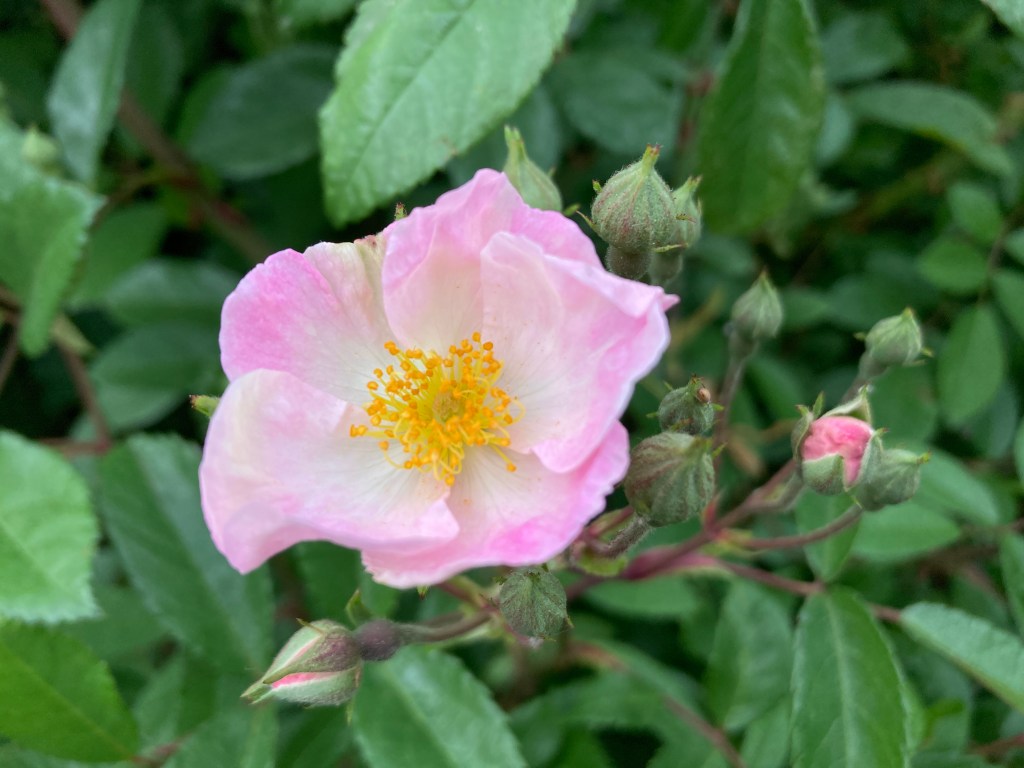
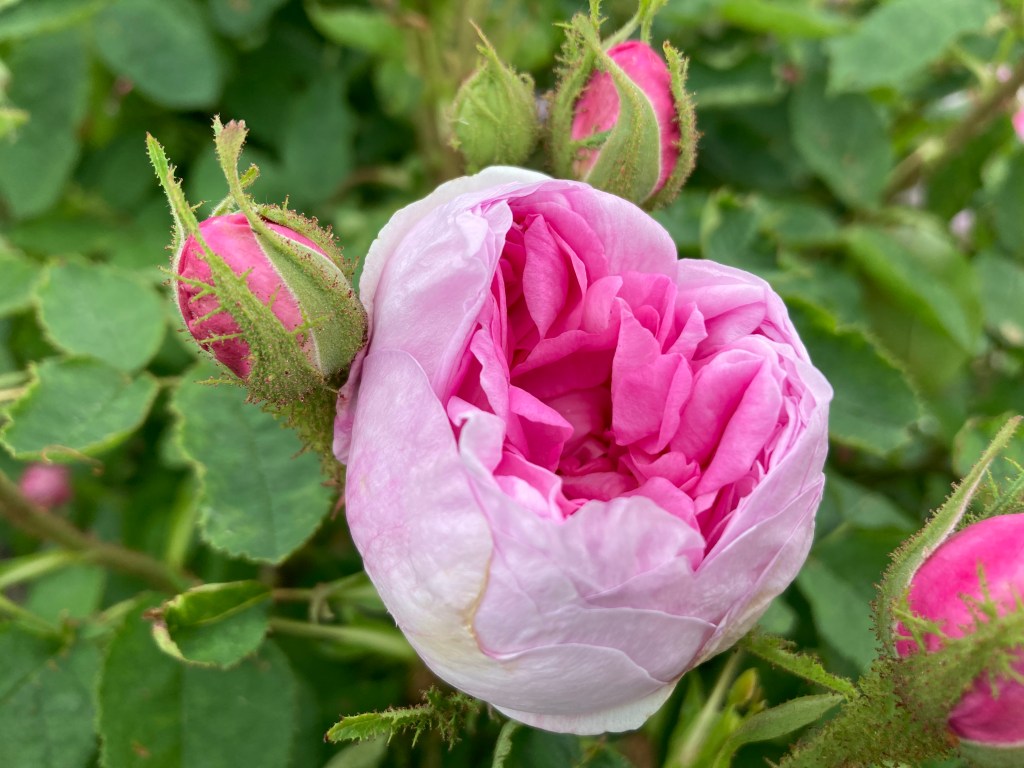
We also checked out the exterior of a castle, located in town as well as Kirche St. Oswald and wrapped up the town tour with views from the town Rose Garden.
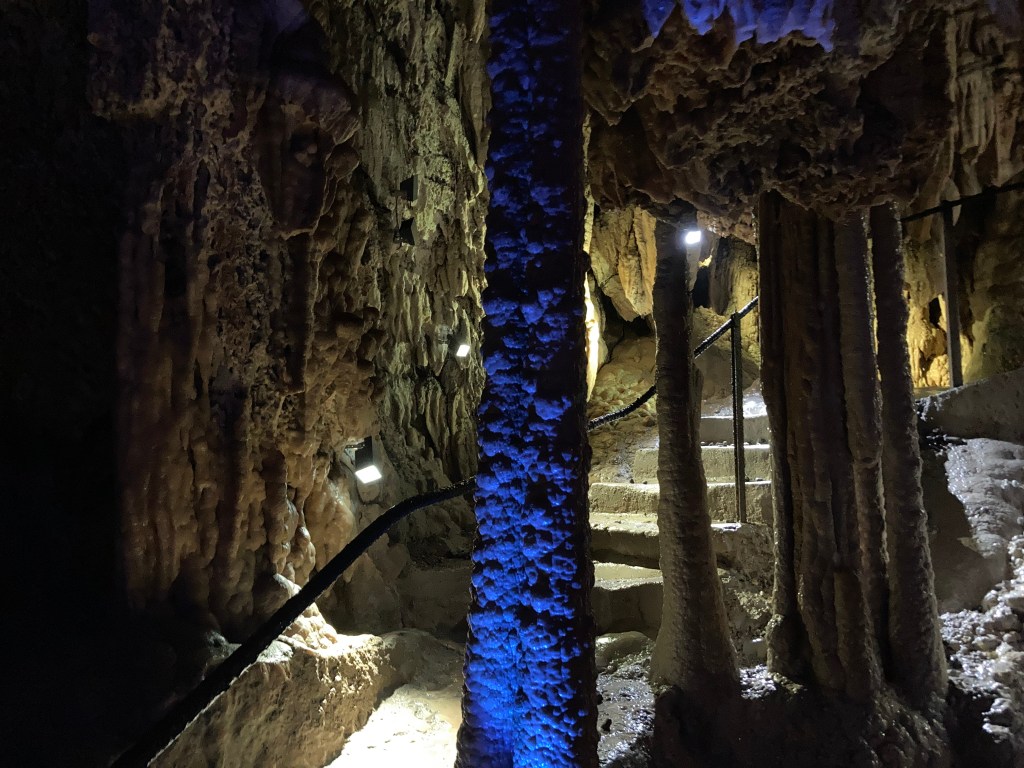
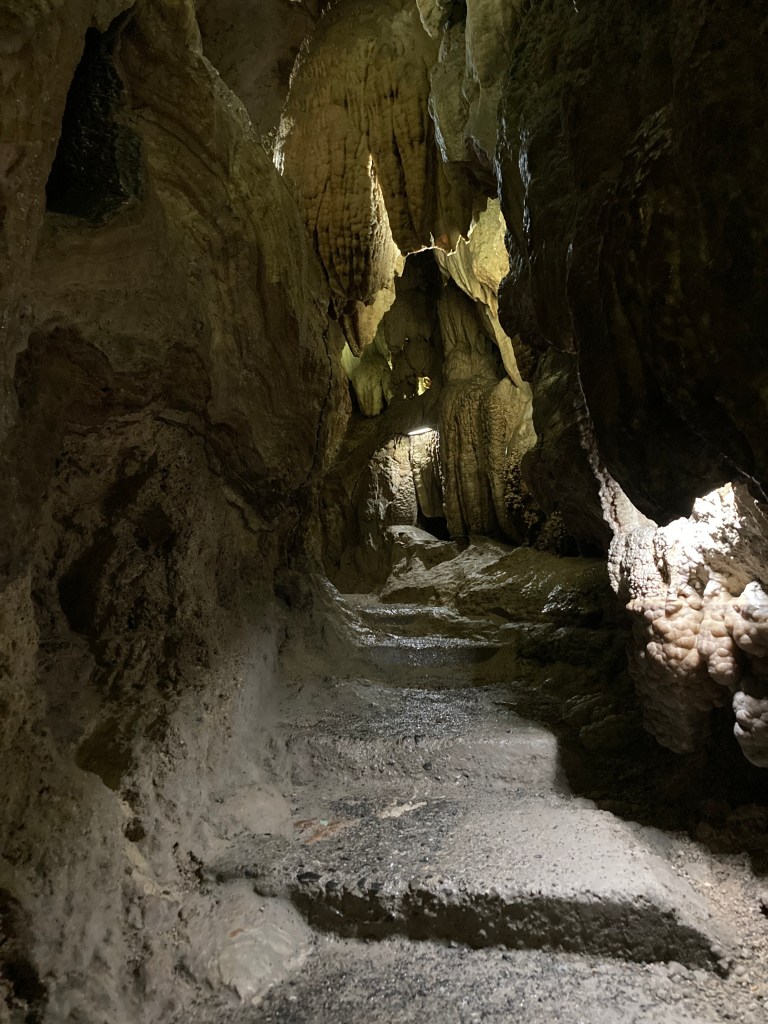
The afternoon brought light rain so we drove to Höllgrotten Caves (Hell Grotto) located in Baar, about a 20 minute drive northeast of Zug. The caves were discovered due to the quarrying needed for railway tunnels in 1863. The quarrying in this area was stopped because of the underground lake in this cavern that was discovered, along with the difficulty in quarrying with that much water. Two years later, the son of the man who discovered the caverns ordered the draining of the caves into the Lorze and made it a priority ever since 1887 that people could come and visit the grotto.
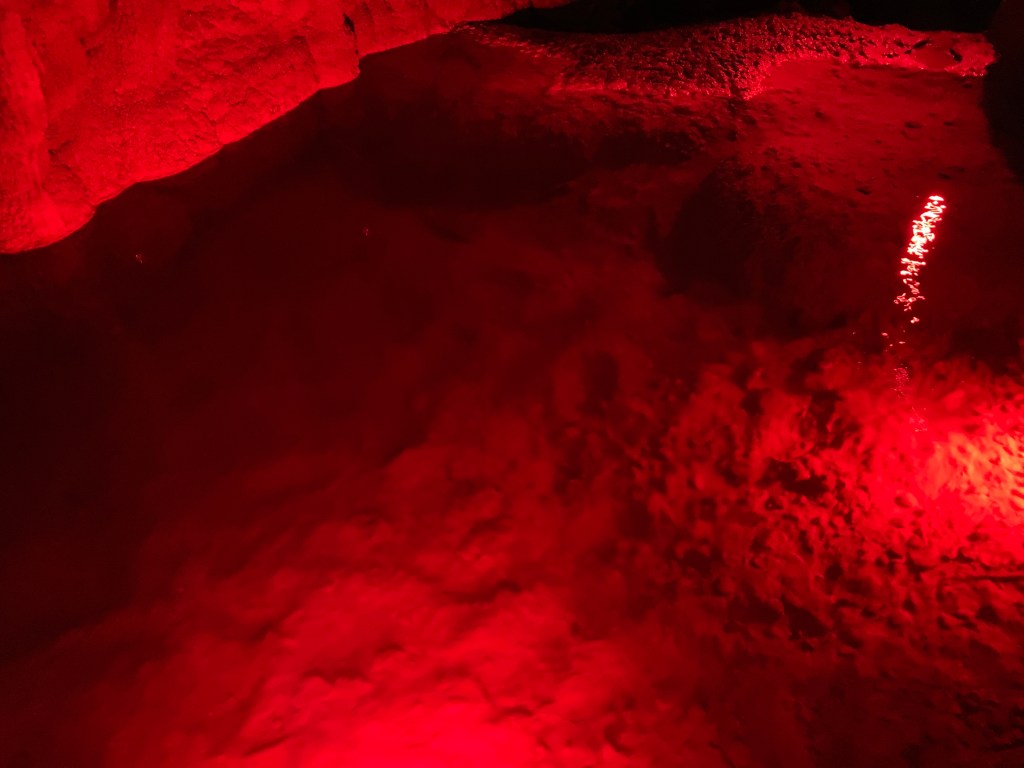
The meandering caves were made extra fun by their use of light and music, along with a mischievous devil spirit graphic called Tüüfeli that appeared in a light show at the last viewpoint. Like the clock tower, it was a self-guided expedition for us. So from great heights to being underground, it was an adventurous day!
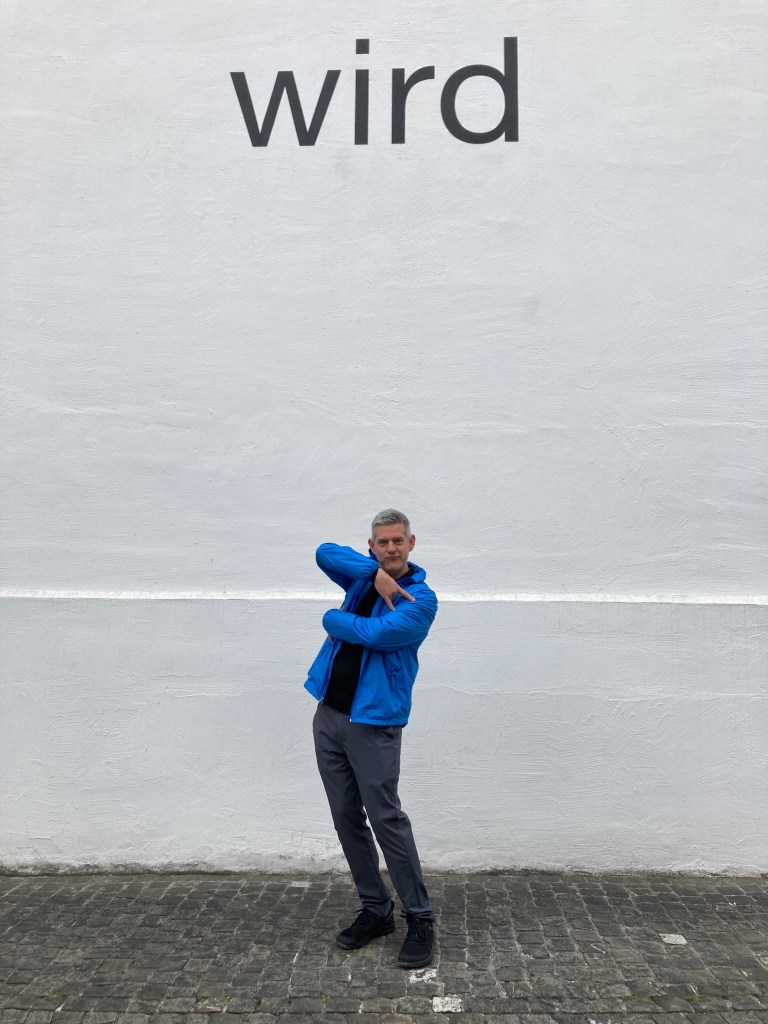
We’ll leave you with some pictures:




 The Rivers and Roads
Leave a comment